
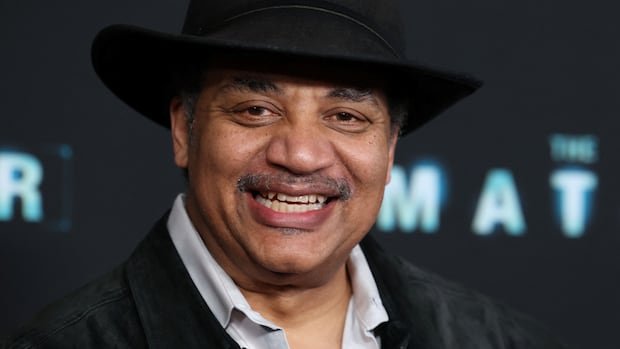
Renowned astrophysicist Neil deGrasse Tyson is well-known for hosting the podcast “Star Talk,” where he engages in discussions on various scientific subjects with experts from across the globe. Recently, Tyson fell victim to a deepfake video that falsely portrayed him affirming the flat Earth theory after careful consideration.
At 67, Tyson is currently touring with his talk titled “This Just In: Latest Discoveries in the Universe!” In a recent interview with CBC News, he addressed the deepfake incident, his concerns about misinformation, and the label of being a “buzzkill.” Tyson highlighted the potential dangers of deepfakes, emphasizing that they could threaten the integrity of the internet and have severe consequences for democracy and civilization if left unchecked.
Regarding scientific literacy and critical thinking, Tyson stressed the importance of enhancing these skills to navigate the modern information landscape effectively. He suggested a shift in the education system to prioritize critical thinking as a fundamental component of learning.
When asked about his thoughts on the universe and cosmos, Tyson expressed a sense of awe and humility, pondering whether human intelligence is adequate to unravel the mysteries of the universe. He likened the pursuit of knowledge to blind men touching different parts of an elephant, emphasizing the vastness of what remains unknown.
Looking ahead to the future of scientific discoveries, Tyson remained optimistic, pointing to the significant advancements made in the past century and anticipating further breakthroughs in the years to come. He acknowledged the evolving nature of knowledge and the potential for transformative discoveries in the future.
In response to being labeled a buzzkill for critiquing scientific inaccuracies in films, Tyson defended his stance by emphasizing the importance of accuracy in storytelling. He compared his role to that of a car expert identifying an anachronistic vehicle in a period film, highlighting the need for respect for expertise in all fields.
Overall, Tyson’s insights shed light on the challenges and opportunities in the realm of science, emphasizing the importance of critical thinking, accuracy, and humility in the pursuit of knowledge.
[End of rewritten article]

