
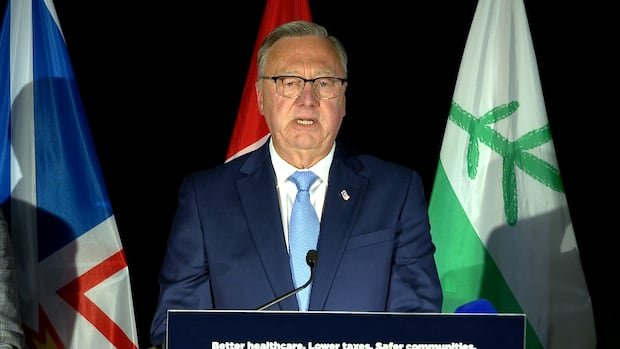
Tony Wakeham restated his commitment to subjecting the Churchill Falls Memorandum of Understanding (MOU) to a referendum after securing his position as the next premier of Newfoundland and Labrador. During his victory speech in his hometown, Wakeham emphasized the development of Churchill Falls, Gull Island, and the electrification of Labrador, aiming to maximize resources for the benefit of local communities.
Having consistently advocated for an independent review of the MOU signed by the previous Liberal government with Quebec, Wakeham, along with external critics, believes that the province can secure a more favorable agreement. In contrast, Liberal Leader John Hogan defended the current deal as being mutually beneficial for both sides, urging voters to trust in his leadership to finalize it by April.
Following his election win, Wakeham expressed the importance of gauging public support for the MOU, emphasizing the need to involve experts in the deliberations. He emphasized a meticulous approach to negotiations, asserting that the decision would eventually be brought before the people of Newfoundland and Labrador for their input, without succumbing to haste.
Newfoundland and Labrador Hydro CEO Jennifer Williams congratulated Wakeham, expressing eagerness to collaborate with him on future endeavors. Quebec Premier Francois Legault also extended his congratulations to Wakeham, endorsing the existing deal as advantageous for both provinces.
While progress has been made in reaching a mutually beneficial agreement, concerns have been raised by political analysts regarding the potential risks associated with holding a referendum, particularly in light of impending deadlines and political changes. Kelly Blidook, an associate professor of political science at Memorial University, cautioned that initiating a referendum could introduce uncertainties and potentially impact the negotiation process.
Blidook highlighted the importance of timely decision-making, noting that shifts in Quebec’s government could influence the outcome of negotiations. Emphasizing the need for strategic partnerships, he underlined the challenges of balancing the demands of negotiations with potential political shifts.
Overall, the renewed focus on the Churchill Falls MOU and the proposed referendum underscore the complexities surrounding energy agreements and the delicate balance between political processes and public engagement.

