
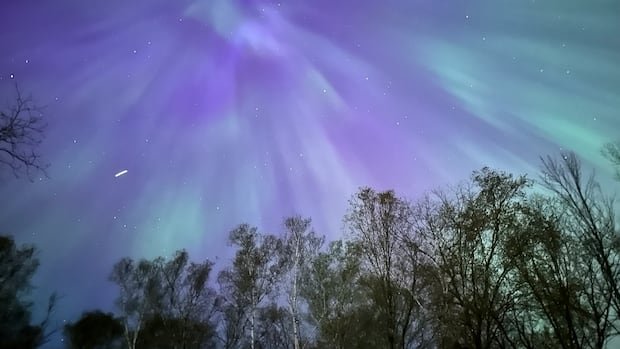
On Monday night, viewers with clear skies may witness a captivating display of the northern lights. The U.S. Space Weather Prediction Center reported a potent X 1.9 solar flare followed by a prolonged coronal mass ejection (CME), which enhances the spectacle. CMEs, fast-traveling solar particles, interact with Earth’s magnetic field, producing the stunning aurora borealis, visible in the northern hemisphere.
The CME from the recent solar eruption is expected to reach Earth between late January 19 and early January 20, causing a severe G4 geomagnetic storm. This storm is considered significant, similar to those in May and October 2024 that resulted in remarkable auroras visible as far south as the Caribbean.
Typically, the aurora borealis is observed in northern regions, but under specific conditions, it can be seen further south. The positioning of the auroral hole, through which CME particles travel, influences visibility. Additionally, the storm must coincide with nighttime for optimal viewing. Cloud cover might obstruct visibility during this time of year, so finding a dark, cloud-free location is recommended.
Due to the severity of the forecasted storm, viewers may not need to face north to witness the aurora borealis. To track visibility in your area, apps like Aurora Alerts and Aurora Forecast can be helpful tools.

