
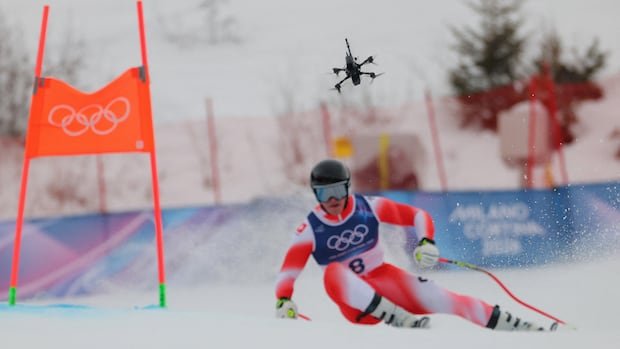
Canadian freestyle skier Megan Oldham secured an Olympic bronze medal in the freeski slopestyle competition, with a drone providing a unique perspective during her final run. The use of first-person view (FPV) drones by the Olympic Broadcasting Services has garnered attention from viewers across various Olympic events, offering dynamic views of athletes in action.
According to International Olympic Committee sports director Pierre Ducrey, the aim is to enhance the viewing experience both in the stadium and for audiences at home. Unlike traditional drones, FPV drones can closely track athletes, matching their movements and speeds on the slopes or tracks.
While drones have been part of the Olympics since Sochi 2014, the introduction of FPV drones represents a new level of coverage. These drones, operated by skilled pilots equipped with headsets and controllers, can reach speeds of up to 75 km/h, enabling them to follow high-speed skiing or navigate tight luge tracks.
The drone operators, who have put in significant effort to master their skills, are praised for bringing viewers closer to the athletes’ experiences. Despite some criticism regarding the noise generated by the drones, athletes like Canadian skier Julien Viel acknowledge the value of the unique aerial shots captured during the competitions.
Ducrey acknowledges that the use of drones is an evolving aspect of the Olympic experience, which may require some adjustment for viewers. However, he believes that integrating drone footage with athletic performances enhances the overall viewing experience.

