
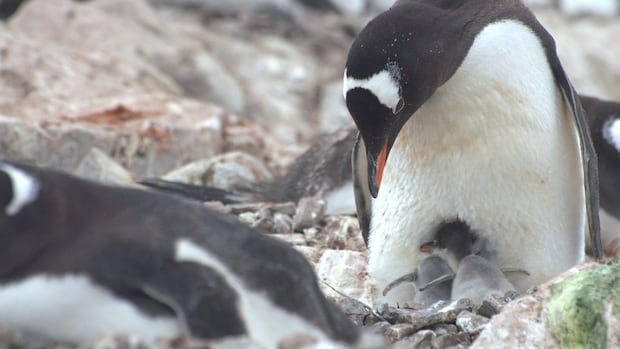
Penguins in Antarctica are altering their breeding patterns rapidly in response to escalating temperatures caused by climate change, as per a study spanning a decade. The research, recently featured in the Journal of Animal Ecology, delved into three penguin species and highlighted varying adaptation rates depending on individual species characteristics.
Biologist Ignacio Martinez, leading the study at the University of Oxford, pointed out the potential emergence of “winners and losers of climate change” among the species. The study focused on Gentoo, Adélie, and chinstrap penguins, with Gentoos showcasing the most significant adaptability. These birds, known for their ability to consume fish besides krill and reside near their breeding habitats year-round, exhibited a notable 13-day advancement in their breeding season.
Martinez emphasized the unprecedented pace of change observed in Gentoos, labeling it as the most rapid among vertebrates. On the other hand, chinstrap and Adélie penguins, reliant on krill for sustenance and undertaking extensive migrations annually, displayed an average shift of 10 days in their breeding timelines.
Utilizing a network of 77 time-lapse cameras scattered across Antarctica, Martinez’s team meticulously monitored the three penguin species residing in close proximity. This detailed observation was crucial in assessing the impact of accelerated global warming, surpassing rates elsewhere in the world, on the penguins.
While the swift adaptation of penguins to changing conditions over the study’s duration is noteworthy, the disparity in adaptation rates among species could lead to potential conflicts over resources and territory. Martinez cautioned that while Gentoos might be thriving and expanding their colonies while the other species diminish, the overall outlook for penguins remains concerning.
Beyond the penguins, a recent study in Nature Communications revealed that various bird, mammal, and reptile species worldwide are adjusting their breeding and migration behaviors in response to climate change. The timing of these activities is shifting earlier, more prominently in species inhabiting polar regions.
The study’s lead author, Viktoriia Radchuk, noted that such timing shifts could aid species in adapting to a changing climate while maintaining stable population levels. While the impact of altered breeding seasons on penguin populations remains to be fully understood, Martinez and his team plan to investigate this aspect in their future research endeavors.

