
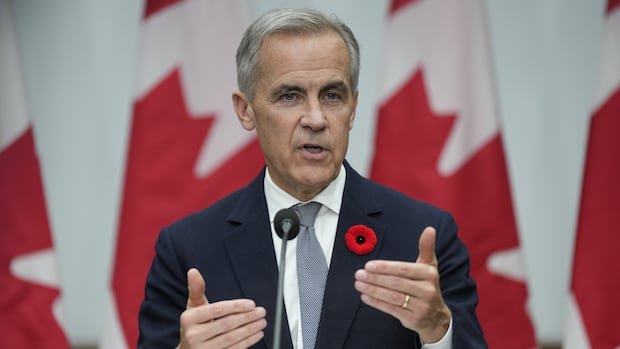
Prime Minister Mark Carney indicated his readiness to defend his government’s upcoming budget in an election if necessary. The budget is scheduled for presentation in the minority Parliament on Tuesday, with uncertainty looming over whether the governing Liberals will garner support from opposition parties.
During the conclusion of the APEC summit in South Korea, Carney emphasized the positive impacts of the government’s proposed investments and initiatives but refrained from explicitly stating confidence in securing enough votes in the House of Commons. He expressed his firm belief in the budget’s suitability for the country at the current juncture, highlighting the significance of the global economic landscape and its implications for Canada.
A potential defeat in the budget vote could trigger a snap election shortly after the last campaign, prompting inquiries about Carney’s willingness to engage in an electoral battle over the fiscal plan. In response, he asserted his commitment to standing up for what is right.
Carney outlined plans for substantial “generational investments” in the Canadian economy and infrastructure, along with a pledge to realign federal finances and restore Canada’s operating account balance within three years.
As opposition parties deliberate on their strategies, the Conservatives and NDP are deliberating their positions. The Conservatives face the dilemma of endorsing a policy agenda they oppose, while the NDP may find aligning with the Liberals challenging given proposed increases in defense spending and mandated program reductions in the coming years.
In a separate development, Carney acknowledged apologizing to U.S. President Donald Trump over Ontario’s anti-tariff advertisements that disrupted trade negotiations. He took responsibility for the incident, expressing regret over the ad’s content and its impact on bilateral relations.
The Ontario government’s television ad featuring excerpts from former President Ronald Reagan’s speech on free trade drew criticism from the Reagan Presidential Foundation and Institute, leading to the abrupt termination of trade talks by President Trump.
The political landscape remains tense as discussions intensify around the budget vote and potential electoral outcomes, underscoring the complexities and challenges faced by key stakeholders in shaping Canada’s economic future.

