
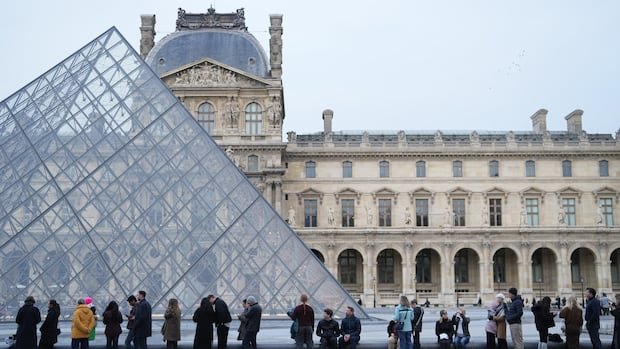
Long queues beneath the iconic glass pyramid designed by I.M. Pei in Paris have become synonymous with the visit to the Louvre, alongside the renowned artworks like the Mona Lisa. The Louvre has implemented a significant price increase for most non-European visitors, raising admission fees by 45 percent to 32 euros ($51 Cdn) from the previous 22 euros. This adjustment is part of a national strategy of “differentiated pricing” introduced last year and now being enforced in major cultural establishments including the Versailles Palace, the Paris Opera, and the Sainte-Chapelle.
Despite the Louvre’s justification for the pricing restructuring, French labor unions have criticized the move, claiming it contradicts the museum’s universal mission as the world’s most frequented museum housing masterpieces like the Venus de Milo and the Winged Victory of Samothrace. Visitors from non-EU countries, notably the United States, which constitutes a significant portion of the Louvre’s international tourists, will be impacted by the updated pricing system.
Under the new regime, non-EU citizens and residents, excluding those from Iceland, Liechtenstein, and Norway, will be subject to the increased rate. Individual visitors outside Europe will be charged 32 euros, while guided tour groups will pay 28 euros, with group sizes capped at 20 to ensure a quality experience. Some travelers have expressed concerns about the fairness of charging higher fees, stressing that tourism expenses should consider the effort and costs involved in traveling.
Despite the price hike, many visitors affirm their commitment to visiting the Louvre, considering it a must-see attraction in Paris. The CGT Culture union has condemned the pricing policy, arguing it commercializes access to culture and creates disparities in heritage access. Certain groups, such as visitors under 18, will continue to enjoy free admission.
In addition to the Louvre, other prominent tourist sites in France are also adopting similar tiered pricing structures to boost revenue for improvement projects. The Louvre anticipates generating an extra 20 million euros annually through the revised ticket fees. The recent theft of the French Crown Jewels from the Louvre, valued at around 88 million euros, has intensified discussions on the protection of cultural treasures and the financial sustainability of heritage sites.
As the Louvre grapples with internal challenges exacerbated by mass tourism, including overcrowding and staff shortages, the museum has faced multiple strikes by workers demanding improved conditions. The ongoing strikes underscore the broader concerns within the Louvre workforce, signaling a pressing need for substantial changes to address the museum’s operational issues.

