
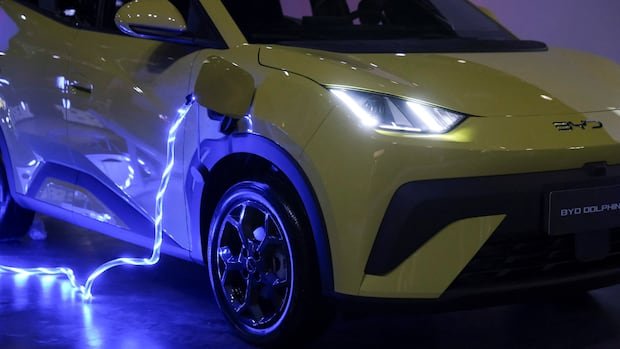
The recent reduction in tariffs is expected to significantly decrease the cost of importing Chinese vehicles into Canada. This development raises questions about the impact on electric vehicle (EV) sales and whether Canada’s charging infrastructure and power grid are equipped to accommodate more vehicles.
Experts analyzing the EV transition in Canada emphasize the need to consider the context of the expected influx of Chinese EVs. While the current charging and grid infrastructure is deemed capable of meeting the demand, there are identified gaps and obstacles that must be resolved to support the expanding EV fleet.
Under the new agreement, China can now export up to 49,000 EVs annually to Canada at a reduced tariff rate of 6.1 percent, down from 100 percent. This adjustment is anticipated to offer Canadians access to more affordable EV options.
The influx of Chinese EVs is relatively small compared to overall auto sales, representing approximately three percent of annual sales. Furthermore, these vehicles make up only a fraction of the zero-emission vehicles sold in Canada in 2024, with the majority still being sourced from other regions.
Lindsay Wiginton from Dunsky, an energy consulting firm, foresees Chinese imports making a notable impact on EV sales in Canada. However, existing projections indicate a substantial growth in EV sales by 2040, with a significant portion expected to be zero-emission vehicles even without the introduction of Chinese imports.
It remains uncertain whether Chinese EVs will complement or displace other EV sales in Canada. The government has reserved 50 percent of the quota for EVs priced under $35,000 by 2030, aiming to potentially introduce more affordable options to the market.
Policy experts like Joanna Kyriazis believe that the availability of lower-cost Chinese EVs could stimulate competition and increase the variety of affordable EV choices in Canada. However, the success of integrating Chinese EVs into the market may require supporting government policies to encourage higher adoption rates.
The existing public charging infrastructure in Canada is deemed sufficient to accommodate the anticipated increase in EVs. While there are gaps in infrastructure, particularly in remote areas and multi-unit buildings, the overall charging network is expected to handle the growing EV fleet.
Overall, the impact of adding more Chinese EVs to the market could potentially lower prices for used EVs, attracting a new segment of buyers. Additionally, the flexible charging patterns of EVs offer opportunities to optimize existing infrastructure efficiently and reduce electricity costs in the long run.

