
A well-known fact about trees is their ability to store carbon dioxide, using it for growth. Younger, faster-growing trees are more efficient at absorbing carbon compared to mature trees. However, this carbon storage is not permanent, as when trees decay or burn, the stored carbon is released back into the atmosphere.
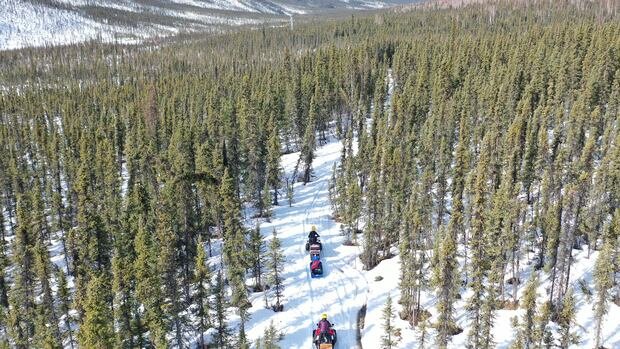
A group of researchers from the UK, Switzerland, and the Czech Republic have introduced a novel concept. They proposed sinking mature trees from the vast boreal forest into the deep Arctic Ocean to sequester carbon for centuries. Their study, published in the online journal npj Climate Action, utilized computer models to assess the impact of removing old, fire-prone trees from specific areas in Canada, Alaska, and Russia. These trees would then be floated down six Arctic rivers, such as the Yukon and Mackenzie, and submerged in the Arctic Ocean.
Simultaneously, new fast-growing trees would be planted to enhance the absorption of carbon dioxide from the atmosphere. The researchers believe that the cold, low-oxygen conditions in the Arctic would inhibit decay, preserving the carbon for thousands of years.
The study indicated that targeting three regions covering 10,000 square kilometers each, amounting to just one percent of the boreal forest, could potentially remove one gigaton of carbon dioxide annually. Despite this promising potential, the scale of the project raises concerns about the energy and associated carbon emissions required for implementation.
The logistical challenges include the use of heavy machinery to cut down trees, transport them to rivers, and ensure their successful sinking in the Arctic Ocean. The natural buoyancy of wood poses a challenge, as it typically takes years for driftwood to sink, especially in icy conditions.
Furthermore, there are ecological considerations, such as the impact on organisms in the ocean floor and the disturbance to the forest ecosystem. Removing mature trees disrupts a complex web of life, affecting various species and Indigenous communities reliant on these forests.
While innovative geoengineering ideas offer solutions to combat rising carbon emissions, they come with uncertainties and potential risks. Addressing the root cause of the issue, which is the burning of fossil fuels, remains the ultimate solution. Technologies like solar, wind, geothermal, and nuclear energy provide renewable alternatives to reduce emissions and combat climate change effectively.
Transitioning to clean energy sources is crucial, although challenges persist due to existing financial interests and resistance to change. By focusing on sustainable energy solutions, we can mitigate the escalating carbon emissions and work towards a more environmentally sustainable future.

