
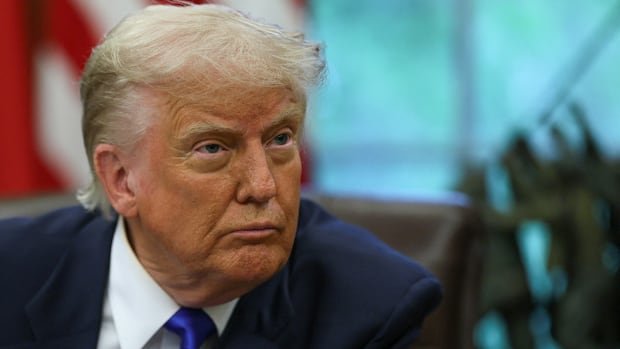
Top-level officials from companies, trade experts, and legal professionals are preparing for a crucial decision by the Supreme Court regarding the legality of the extensive global tariffs imposed by U.S. President Donald Trump. The outcome could lead to a substantial battle over potentially reclaiming up to $150 billion US from the U.S. government in refunds for previously paid import duties if the ruling goes against Trump.
Speculation has grown that the tariffs imposed by Trump under the International Emergency Economic Powers Act of 1977 may be invalidated after conservative and liberal justices expressed doubts about his authority to impose such duties during the court arguments held in November.
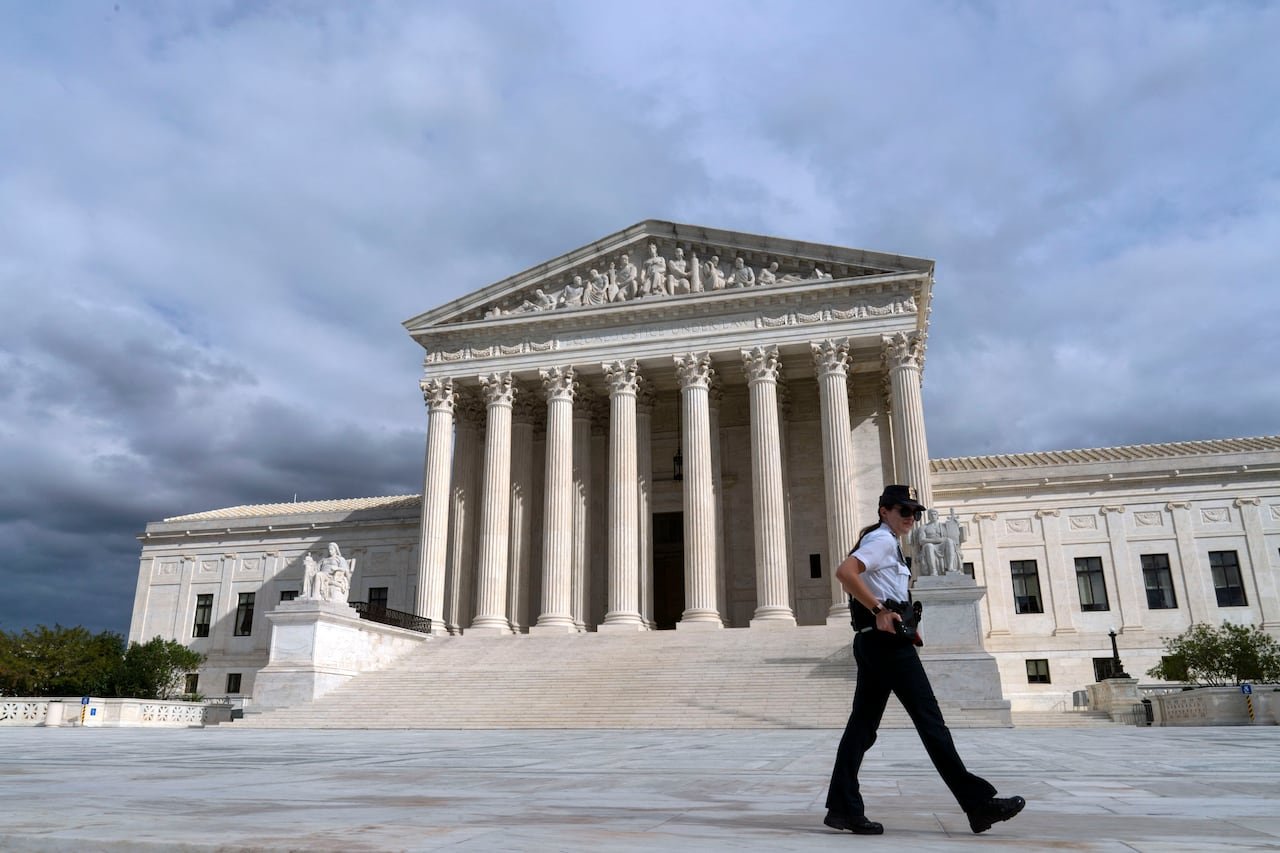
The Supreme Court is set to announce its rulings on Friday, but the specific cases to be addressed have not been disclosed, following the usual protocol.
Despite the anticipation that Trump’s tariffs could be nullified, some companies are wary that the president might not facilitate a straightforward refund process if the tariffs are indeed deemed invalid.
Jim Estill, the CEO of Danby Appliances, a Canadian company specializing in household appliances imported from China and other Asian nations targeted by the tariffs, expressed concerns over the potential refund complexities. Estill mentioned that reclaiming the $7 million owed could lead to additional complications with retailers like Home Depot and their customers seeking a share of the refunds.
“It’s bound to create a chaotic situation,” Estill remarked.
Nearly $150 Billion US in Tariff Collections
President Trump broke new ground by utilizing the International Emergency Economic Powers Act (IEEPA) to levy tariffs, a law traditionally used for imposing sanctions or freezing assets of U.S. adversaries.
According to the most recent data from the U.S. Customs and Border Protection (CBP) up to December 14, 2025, the tariffs imposed under IEEPA have generated an estimated $133.5 billion US. Based on the ongoing collection rates, the total amount is projected to approach $150 billion US.
U.S. Treasury Secretary Scott Bessent has expressed confidence in the Supreme Court supporting Trump’s stance.
U.S. Trade Representative Jamieson Greer has indicated that any potential refund claims would need to be managed by the Treasury and CBP, with assurances that any revenue losses could be recouped through new tariffs imposed by Trump under alternative legal frameworks.
Trump implemented IEEPA-related tariffs in two phases, first with “reciprocal” tariffs on goods from various trading partners last April, citing a national emergency related to trade deficits. Subsequently, in February and March, tariffs were imposed on China, Canada, and Mexico, justified by a national emergency concerning the trafficking of illicit drugs.
Businesses Hopeful but Cautious About Refunds
The viability of any refund process hinges on the Supreme Court’s guidance on refunds or a potential remand to a lower court, likely the Court of International Trade, as explained by customs lawyer Joseph Spraragen from the firm Grunfeld, Desiderio, Lebowitz, Silverman & Klestadt.
Importers typically have a window of 314 days to rectify import discrepancies before they are finalized, ruling out any refund possibilities. This deadline has already lapsed for imports from China subjected to tariffs in February 2025.

