
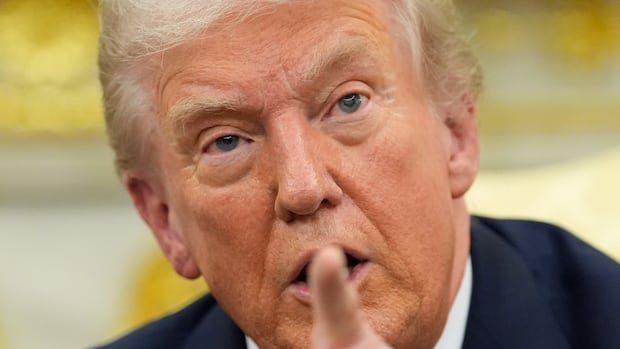
In a recent development, Donald Trump expressed his concern regarding the accurate portrayal of Ronald Reagan’s trade policy views and its potential influence on the U.S. Supreme Court justices. This concern led Trump to halt trade negotiations with Canada over a television advertisement issue.
Through a social media post late on Thursday, Trump announced the termination of all trade negotiations with Canada due to what he described as “egregious behavior.” Just two days earlier, he had acknowledged why Canada might produce such an ad given the circumstances.
The Ronald Reagan Presidential Foundation and Institute played a pivotal role in Trump’s decision by suggesting that the Ontario government’s ad misrepresented Reagan’s views without providing specific details.
Despite the controversy, the attention drawn to Reagan’s message from 1987 has increased significantly, with various news outlets producing detailed explanations and the foundation sharing a link to the original video.
The situation has underlined the differences between past presidents and the current administration, emphasizing the challenges faced by Canada in the evolving trade landscape. Flavio Volpe, president of Automotive Parts Manufacturers’ Association, highlighted the uncertainties ahead and the need for a strategic approach.
This recent clash echoes previous instances of trade tensions between the U.S. and Canada, with Trump’s abrupt decisions impacting negotiations. The resolution of grievances, such as the digital services tax issue, has previously allowed discussions to continue, albeit with prolonged uncertainties.
Ontario Premier Doug Ford’s decision to conclude the ad campaign following Trump’s reaction may signal a temporary victory. However, underlying frustrations on both sides suggest a need for cohesive strategies within Team Canada to navigate future challenges effectively.
The interconnected nature of trade issues with the U.S. underscores the importance of unified responses to avoid further escalations. While the spectacle surrounding the ad campaign may have caught Trump’s attention, the real impact lies in the potential influence on public opinion and trade dynamics.
As the repercussions of trade disputes continue to unfold, the essence of consequences highlighted by Reagan’s warnings in 1987 remains relevant. The evolving economic landscape and consumer impacts indicate the enduring significance of thoughtful trade policies amidst political theatrics.

