
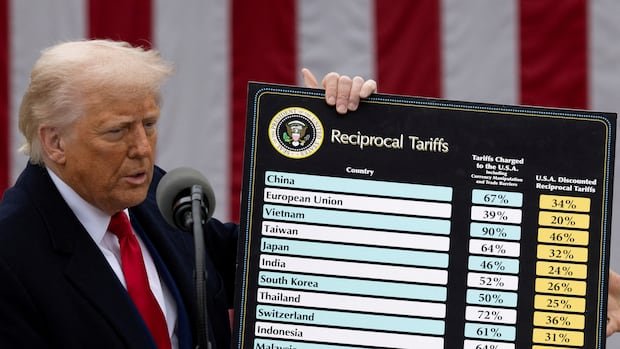
The U.S. President’s administration initiated a trade inquiry into surplus industrial capacity in 16 key trading nations to reinforce tariff pressure post the U.S. Supreme Court’s recent decision. Notably, Canada was excluded from the investigation. The U.S. Trade Representative mentioned that the investigation under Section 301 might result in new tariffs on countries like China, the European Union, India, Japan, Mexico, and South Korea by summer.
Apart from the mentioned nations, the excess capacity probe also includes Taiwan, Vietnam, Thailand, Malaysia, Cambodia, Singapore, Indonesia, Bangladesh, Switzerland, and Norway. Following the Supreme Court’s ruling last month, President Trump’s team aims to recoup lost revenues by utilizing alternative laws to impose new levies.
The administration’s move involves initiating Section 301 investigations under the Trade Act of 1974, potentially leading to the imposition of new import duties. However, U.S. officials emphasized not pre-determining the investigation’s outcome during a press call on Wednesday, focusing on safeguarding American jobs.
The process of replacing previous tariffs under the Trump administration could reignite global economic turbulence observed last year. The impact of new import taxes on existing trade agreements remains uncertain. Officials advised trading partners to adhere to their agreements despite the ongoing probes, hinting at possible Section 301 tariffs in the future.
The government is targeting persistent trade surpluses, subsidies, wage suppression, and plans to ban goods produced through forced labor. Additionally, potential investigations may cover digital service taxes, pharmaceutical pricing, and ocean pollution. The U.S. Commerce Department is conducting separate inquiries under Section 232 of the 1962 Trade Expansion Act.
European and Asian countries expressed concerns over the ongoing investigations, emphasizing the importance of existing trade agreements. China denounced the U.S. claim of overcapacity as misleading and opposed unilateral tariff measures. Taiwan and Indonesia highlighted the significance of their trade agreements with the U.S. in guiding bilateral trade relations.

