
Voices with close ties to the U.S. military have recently surfaced, raising concerns about a series of boat strikes on suspected drug vessels in the Western hemisphere conducted by the Trump administration since September 2. An unnamed Pentagon official and a retired U.S. Air Force colonel have voiced apprehensions that the intensified focus on Latin American drug trafficking could diminish American military capabilities in other regions and result in unforeseen repercussions. They suggest that such actions may hinder cooperation with allies in the shared objective of reducing U.S. drug-related fatalities by disrupting the drug supply.
Critics within the military have criticized the administration’s legal justifications for treating drug cartels as enemy combatants, likening them to terrorist groups. They argue that the comparison is flawed as drug cartels lack the organized structure of terrorist organizations and are more susceptible to direct confrontation by U.S. forces due to their operational nature.
Retired Air Force Colonel J. William DeMarco emphasized the importance of perception and messaging in the administration’s actions, suggesting that the strikes are intended to assert U.S. strength and influence on the global stage rather than solely combatting drug trafficking.
The ongoing strikes have resulted in the deaths of at least 61 individuals. Speculations suggest that these operations could be part of a broader strategy aimed at regime change in Venezuela, particularly evident through increased U.S. rewards for the capture of Venezuelan officials and the geographical proximity of the strikes to Venezuela’s borders. Additionally, the U.S. has expanded its military presence to the Pacific region, underscoring the evolving nature of the operations beyond the initial focus on the Caribbean.
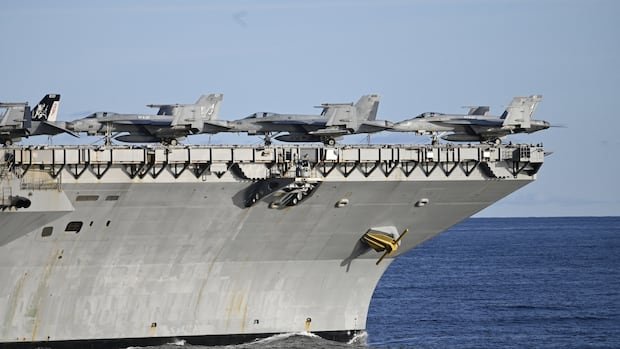
As the U.S. intensifies its efforts against alleged drug traffickers, it has redirected the USS Gerald R. Ford aircraft carrier to South America, leaving no carriers deployed in Europe or the Middle East. This shift comes amid escalating tensions in the Middle East, raising concerns about the potential implications of the U.S. military reallocation.
The critics also highlight the broader geopolitical implications of the U.S. actions, particularly concerning China and its potential reactions to similar tactics in the South China Sea. They caution that the U.S. approach, primarily targeting drug flows, may not align with the nuanced realities of drug trafficking networks and the diverse challenges posed by different regions.
Within the U.S., Democratic lawmakers have raised transparency concerns regarding the administration’s military actions, while international experts have criticized the use of lethal force in the region as a violation of international laws. Despite criticism and condemnation, the Trump administration’s stance on combating drug trafficking through military means remains consistent with its earlier policy directives.

