
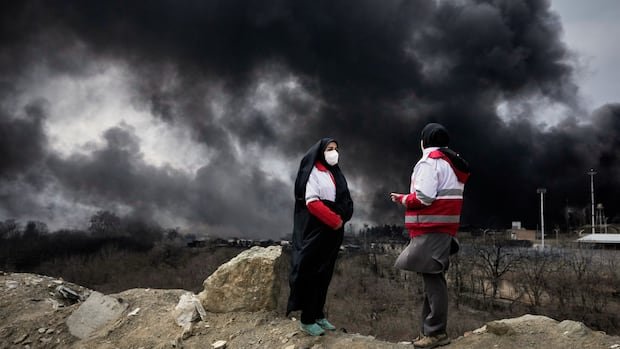
Experts warn of the detrimental health and environmental impacts of Israeli airstrikes on oil facilities in and around Tehran, which could have lasting effects on water and food sources long after the immediate aftermath.
The World Health Organization (WHO) raised concerns on Tuesday regarding the presence of toxic pollutants in the air following the strikes that occurred over the weekend on four oil storage sites and an oil production transfer center, resulting in massive flames and thick, black clouds that later led to the formation of black, oily rain.
Residents in the densely populated city of Tehran, with a population of 10 million, reported difficulties in breathing and symptoms like dizziness and burning sensations as the black rain, mixed with chemicals from burning oil, descended from the sky.
Christian Lindmeier, a spokesperson for WHO, emphasized the risks posed by the black rain and acidic elements, particularly in terms of respiratory health, during a media briefing in Geneva.
The UN health agency reported multiple instances of black rain post the attacks, which occurred early in the U.S.-Israeli conflict with Iran, and endorsed Iran’s recommendation for people to stay indoors to avoid exposure.
The Iranian Red Crescent Society issued a warning about the potential for severe lung damage and chemical burns from the black rain.
‘Highly Toxic’
Peter Ross, an expert in pollution and senior scientist at the Raincoast Conservation Foundation in Sidney, B.C., highlighted the significant toxicity of petroleum mixtures, which can contain numerous hazardous substances, including highly toxic compounds like benzene.
Ross emphasized the real possibility of severe and long-term consequences resulting from exposure to these toxic gases released into the air during fires, which can lead to dizziness, unconsciousness, and even fatality.
Reports of individuals experiencing eye irritation suggest the presence of sulfur and nitrogen oxides in the air, compounds known to be key contributors to acid rain in past decades, raising concerns about potential carcinogenic effects and long-term health implications as petroleum seeps into water bodies and groundwater.

Ross noted that populations located downwind and downstream of the blast sites are at heightened risk, with potential threats to public health, drinking water safety, fisheries, and agriculture in the affected areas.
Comparisons have been drawn to the Kuwaiti oil fires of 1991, where similar black rain and respiratory issues were reported, along with adverse impacts on marine life and vegetation.
Allegations of Chemical Warfare by Iran
The UN, through WHO, is closely monitoring the health hazards arising from the substantial release of toxic compounds into the air due to the strikes, questioning the adherence to humanitarian law, especially as the targeted sites may not have been exclusively military in nature.

