
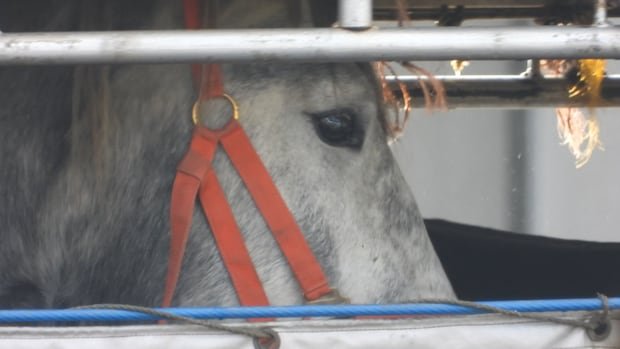
A recent inquiry by animal welfare activists reveals that horses transported for slaughter in Japan endure injuries, illness, and fatalities, sparking renewed calls for Canada to halt such exports. Kaitlyn Mitchell, from Animal Justice, emphasized the ongoing suffering and fatalities of horses during these flights, urging a more humane approach to shipping practices. Despite opposition to a ban on shipments by retired Conservative senator Donald Plett, he advocates for stricter reporting measures and accountability for incidents of horse injury or death.
In 2023, Statistics Canada reported 2,512 horses exported to Japan for slaughter, totaling $19 million in value. This industry involves around five export firms and numerous producers primarily in Alberta, with additional contributions from Manitoba and Ontario. Horsemeat, a delicacy in Japan, is typically served as raw sashimi known as basashi or sakura niku.
Animal Justice and the Life Investigation Agency (LIA) collaborated to analyze Government of Japan records from 18 shipments of approximately 1,822 horses from Edmonton and Winnipeg between September 2024 and September 2025. The groups compared Japanese data with documents obtained from the Canadian Food Inspection Agency (CFIA) by the Canadian Horse Defence Coalition (CHDC), revealing that at least nine horses perished due to illness or injuries during transportation.
Numerous horses suffered from various health issues during transport, such as lacerations, swollen abdomen, and fever, with some requiring euthanasia upon arrival in Japan. Notably, discrepancies were found between Japanese records and CFIA reports concerning horse welfare during these shipments.
Mitchell highlighted specific incidents, including a transport from Edmonton in November 2024 where three horses died and several others arrived with health complications, contrary to CFIA documentation. Despite efforts to improve documentation and transport conditions, Mitchell expressed concerns about the industry’s inherent challenges. Various legislative proposals aimed at banning live horse exports have been introduced, with ongoing advocacy for stricter regulations and oversight.
Despite differing perspectives on the matter, the welfare of horses remains a focal point for both advocates and industry stakeholders. Calls for enhanced accountability and regulatory measures persist, as stakeholders navigate the complex landscape of live animal exports for slaughter.

