
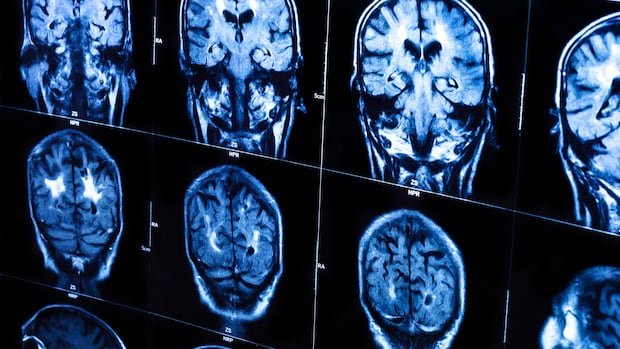
When Dave Evans had surgery to remove a pituitary gland tumor last October, his medical team operated in a small area near the base of his brain. Neurosurgeon Dr. Neil Duggal and other clinicians at London Health Sciences Centre (LHSC) in Ontario aimed to completely extract a growth causing Evans extreme fatigue, headaches, and vision loss. The intricate procedure involved navigating around vital arteries and nerves surrounding the pituitary gland.
Typically, surgical teams wait for a follow-up MRI to determine the extent of tumor removal and any remnants left. In a groundbreaking move during Evans’s surgery, the LHSC team used a new mobile MRI mid-procedure to assess their progress. Upon spotting residual tumor on the scan, Duggal re-entered through Evans’s nose to extract nearly 99% of the benign tumor, significantly improving his condition.
Despite sounding like science fiction, mobile brain scanners have been in use for over a decade and are increasingly deployed in Canadian healthcare facilities for various medical procedures. Duggal praised the innovation as a game-changer and has utilized the hospital’s mobile MRI in several more pituitary tumor surgeries to reduce the need for follow-up interventions.
The adoption of mobile scanners in Canada is on the rise, driven by technological advancements and cost-effectiveness. These portable devices offer a more accessible and affordable option compared to traditional large MRI and CT scanners. Researchers emphasize the potential of mobile scans in enhancing surgical outcomes and expanding healthcare reach, particularly in rural and remote areas.
In Alberta, the nation’s sole mobile stroke unit operates a CT scanner inside an ambulance to diagnose strokes on the go. Dr. Ashfaq Shuaib, a neurology professor at the University of Alberta, spearheaded the initiative, highlighting the unit’s success in providing prompt stroke diagnosis and treatment within a 250-kilometer radius of Edmonton.
While mobile scans offer significant benefits in expediting diagnoses and treatments, challenges such as connectivity issues in rural settings and image quality disparities persist. Researchers stress the importance of continuous technological enhancements and professional interpretation of results to maximize the potential of mobile MRI and CT scanners in improving patient care and accessibility.
The future looks promising for this emerging technology, with opportunities for broader research and application across various medical fields. Patients like Evans, whose quality of life drastically improved post-surgery, are testaments to the positive impact of mobile imaging technology in healthcare. The evolving landscape of mobile scanners holds great promise for enhancing healthcare outcomes and accessibility in the years to come.

