
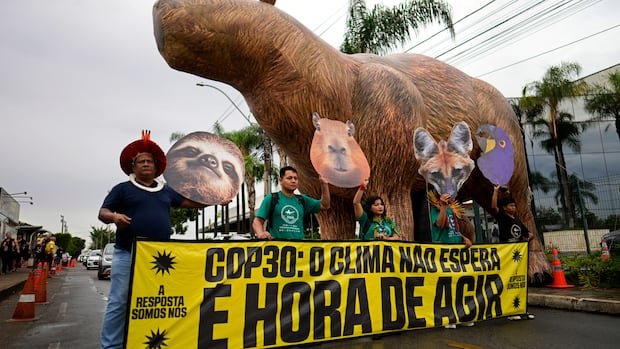
All nations worldwide were tasked this year with presenting updated strategies to combat climate change. However, a recent report from the United Nations indicates that these strategies have made minimal progress in curbing the future warming of the Earth. The withdrawal of the United States from these efforts has further hindered the overall progress, as stated in the report.
The latest climate action plans, required every five years under the 2015 Paris Agreement, are projected to reduce future warming by approximately 0.3 degrees Celsius compared to previous estimates. Surprisingly, only one-third of the countries that are signatories to the agreement, representing 63% of global emissions, have submitted their new climate plans.
Canada submitted its most recent climate plan in February, but it has been deemed “highly insufficient” by the Climate Action Tracker. The country’s emissions reduction targets fall short of the necessary levels, with forecasts showing a significant gap between the proposed reductions and the actual targets.
Experts from the Institut de l’énergie Trottier at Polytechnique Montreal have emphasized the urgent need for coordinated policies to transition towards a net-zero energy system. Although Canada has established a robust process for setting climate targets, there have been shortcomings in implementing the necessary actions to achieve them.
In contrast, the United States, under the Trump administration’s policies, is projected to contribute an additional 0.1 degrees Celsius of warming due to regulatory rollbacks and hindrances to green energy projects. This shift in policy significantly impacts global efforts to combat climate change and underscores the importance of international cooperation in addressing this critical issue.
The report highlights the urgent need for countries to reduce carbon dioxide emissions by an additional two billion tonnes per year to offset the growing carbon pollution from the United States. With global emissions currently exceeding sustainable levels, decisive action is imperative to limit global warming and protect vulnerable communities and ecosystems from the adverse impacts of climate change.
Climate experts stress the importance of ambitious and immediate action to mitigate climate change, emphasizing the profound economic, health, and environmental benefits of transitioning to a low-carbon future. The upcoming UN climate talks are seen as a crucial opportunity for world leaders to demonstrate their commitment to addressing climate change effectively and safeguarding the planet for future generations.

