
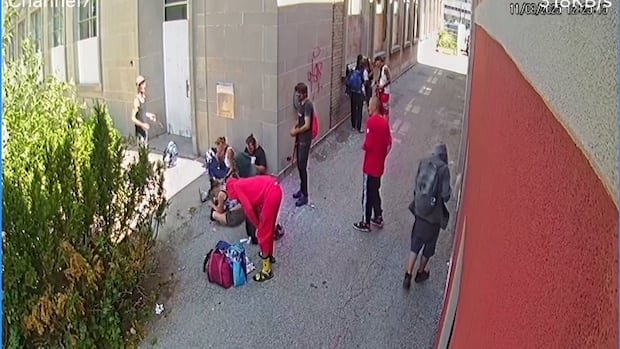
In downtown Oshawa, a property manager is facing challenges that could jeopardize her family business, located across from a non-profit agency aiding the homeless. Issues such as drug use, vandalism, and public urination are plaguing the Lord Simcoe Place on Simcoe Street S., a property that has been in Cindy Malachowski’s family for generations. The building is experiencing its highest vacancy rate in over five decades, with tenants departing due to concerns about activities like public urination and drug use near the premises.
These problems reflect broader worries in downtown Oshawa, where Mayor Dan Carter has highlighted the area’s concentration of social services compared to the rest of Durham Region. Businesses in the area have reported difficulties stemming from individuals accessing these services. Experts point out the lack of shelter spaces in Ontario and stress the need to address the underlying causes of homelessness.
Malachowski’s building faces Back Door Mission, a non-profit organization housed in a former church. The mission operates Mission United, a program developed during the COVID-19 pandemic and continuing in partnership with the Canadian Mental Health Association (CMHA) Durham. Executive director Nathan Gardner emphasizes modifications made to the mission’s programs to consider its clients, staff, and the community impact.
Since the onset of the pandemic, Malachowski has observed individuals outside her property who are unconscious and aggressive. She frequently discovers used needles, deals with vandalism, and struggles with maintaining the property due to incidents of urination, vomit, and feces. Mayor Carter declared a public health crisis in Oshawa in May, citing escalating violence and unlawful behavior associated with homelessness, mental health issues, and addiction.
Malachowski, a former CMHA employee, asserts that Back Door Mission has mishandled Mission United, leading to individuals being turned away when the program reaches capacity, subsequently spilling onto her property. Gardner acknowledges the concerns from businesses and the community, noting the mission’s efforts to address these issues, including enhanced security measures, increased signage against trespassing, and the cessation of outdoor programs.
The Mission United program has transitioned towards community-based initiatives, offering new programs focused on homelessness support and addiction coping strategies. Gardner admits to a lapse in meaningful engagement during this period of transition but underscores the mission’s accountability and commitment to improving services.
In response to complaints, the Ministry of Health highlighted initiatives aimed at enhancing care for homelessness and addiction, including the establishment of 28 Homelessness and Addiction Recovery Treatment hubs. Concerns raised by local businesses, including Parmac Relationship Marketing Ltd. and Wilson Furniture, underscore the community’s call for increased affordable housing and recovery programs.
As the homelessness crisis intensifies in Oshawa, business owners express concerns about the impact on downtown businesses and community safety. They stress the importance of addressing root causes and enhancing support systems to revitalize the community and ensure a safe environment for all residents.

