
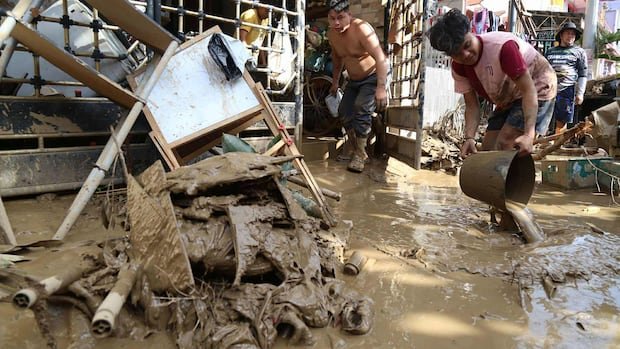
Philippine President Ferdinand Marcos Jr. has announced a state of emergency following the devastating impact of Typhoon Kalmaegi, which resulted in the loss of at least 114 lives and left 127 individuals missing in central provinces. The cyclone caused extensive damage, particularly in Cebu, where most of the fatalities occurred due to flash floods before the storm moved out of the region.
Nearly two million people were affected by the typhoon, with over 560,000 villagers displaced, including almost 450,000 evacuated to emergency shelters. The emergency declaration aims to expedite fund distribution, prevent food hoarding, and curb overpricing. Kalmaegi, with sustained winds reaching up to 130 km/h and gusts up to 180 km/h, moved away from Palawan province into the South China Sea.
Authorities, including Bernardo Rafaelito Alejandro IV from the Office of Civil Defence, reported the majority of deaths in Cebu due to flooding, landslides, and falling debris. The devastating flooding forced residents to seek refuge on their rooftops, pleading for rescue as waters continued to rise. The Philippine Red Cross received distress calls from stranded individuals in Cebu, highlighting the urgent need for assistance.
In Cebu, 49 individuals perished in floods, while others lost their lives to landslides and falling debris. Additionally, 62 people were reported missing in neighboring provinces. Concerns have been raised about flood control projects in Cebu, where years of quarrying and substandard infrastructure exacerbated the disaster.
As the Philippines braces for more severe weather, Kalmaegi is expected to make landfall in Vietnam and Thailand. Thousands have been evacuated in anticipation of the storm’s impact, with disruptions in maritime and air travel. The Philippines, prone to natural disasters, faces yet another challenging situation as neighboring countries also prepare for the approaching typhoon.

