
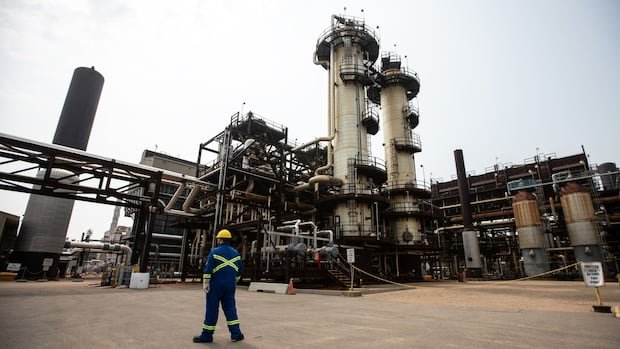
Leaders in Canada’s oil and gas industry are concerned that the proposed industrial carbon levy could diminish the country’s competitive advantage during a time when global demand for reliable energy is high. According to Lisa Baiton, who heads the Canadian Association of Petroleum Producers, Canada stands alone in imposing such a tax on its producers. Baiton emphasized that amid ongoing conflicts in the Middle East, Canada, with its vast oil and gas reserves, has a vital role to play in ensuring global energy security. However, she lamented that the focus seems to be on increasing costs and reducing competitiveness rather than seizing the opportunity to enhance energy security.
The ongoing 2026 BMO CAPP Energy Symposium in Toronto is highlighting the urgency to expedite the development of oil and gas export infrastructure in Canada, targeting markets beyond the traditional customer, the United States. Alberta intends to submit an application for a new West Coast crude oil pipeline to accelerate projects deemed in the national interest. A recent agreement between the Alberta and federal governments outlined plans for a new pipeline in British Columbia, coupled with an industrial carbon price to support the economics of the Pathways carbon capture project. However, details regarding the carbon price and Pathways components are still unresolved beyond the specified deadline in the energy accord.
Under the memorandum of understanding, Alberta aims to increase its industrial carbon price to $130 per tonne from the current $95. While some suggest that oilsands producers could offset the additional carbon costs through higher export revenues to Asia, others, like Cenovus Energy CEO Jon McKenzie, argue that the levy would only make Canadian industries less competitive globally. Birchcliff Energy Ltd.’s CEO, Chris Carlsen, noted the challenges in further reducing emissions and highlighted the financial constraints of carbon capture and storage options for smaller companies.
Despite Canada’s significant oil reserves and favorable market conditions, concerns persist about the competitiveness of the industry. While existing operations have achieved cost efficiencies, doubts remain about the feasibility of expanding production due to prolonged project approval timelines and logistical obstacles. Randy Ollenberger, head of oil and gas research at BMO Capital Markets, stressed that Canada’s oil remains competitive globally in terms of cost efficiencies but highlighted the need for conducive policy conditions to facilitate future growth in production.

