
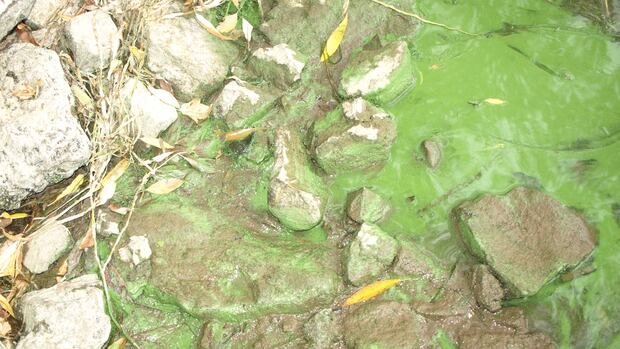
Katelyn Bruckner resides close to Gage Park in Hamilton but often heads to the city’s harbor once weekly to enjoy a coffee and stroll with her dog by the waterfront. She mentioned that this year has been particularly pleasant compared to the previous year’s 2024 season, which was marred by a foul-smelling algae bloom and subsequent decay that deterred many from visiting the area.
Bruckner recalled the unpleasant stench of the 2024 algae bloom, describing it as reminiscent of “sour egg.” She expressed relief that this summer passed without a repeat of the issue, allowing her to enjoy the waterfront from Bayfront Park to Pier 8 without disturbances. While sections of the harbor still exhibit significant masses of goo resembling pea soup, they did not grow into large foul-smelling mats as they did the previous year.
During a recent walk near the Royal Hamilton Yacht Club, Bruckner remarked that she hasn’t noticed any unpleasant odors this year. City and Royal Botanical Gardens officials attributed the different outcomes between the two summers to varying rainfall patterns despite both experiencing extreme heat, a contributing factor to algae growth.
Cari Vanderperk, Hamilton Water’s director of watershed management, explained that algae proliferation requires sunlight, heat, and nutrients. While sunlight and heat were present, the absence of intense rainstorms during the season prevented the rapid growth of algae mats. In 2024, heavy rainstorms overwhelmed the city’s drainage systems, leading to nutrient-rich runoff entering the lake and fueling algae blooms.
Vanderperk highlighted that the extended ice cover in most of the harbor during the previous winter likely played a role in inhibiting algae growth. She emphasized that different freshwater algae species can thrive under varying environmental conditions, not just blue-green algae.
According to Jennifer Bowman, a senior aquatic ecologist at the Royal Botanical Gardens, urban runoff, particularly from sewage overflows, is the primary source of nutrient pollution in the harbor. She advocated for rainwater retention practices near its source to minimize runoff, suggesting homeowners redirect rainwater to permeable areas like yards and gardens instead of hard surfaces to mitigate pollution.
Bowman praised upcoming stormwater rates in the city, designed to promote permeable surfaces and discourage excessive hard surfaces like large parking lots. She noted that this year also saw improved water quality in Cootes Paradise, leading to robust growth of underwater plant life visible from the High-Level Bridge.
Local resident Larry Tagart, a frequent visitor to the waterfront, commended this year’s conditions compared to the odorous summer of 2024. He acknowledged slight hints of odors in certain spots but overall found the environment much more pleasant this year.

