
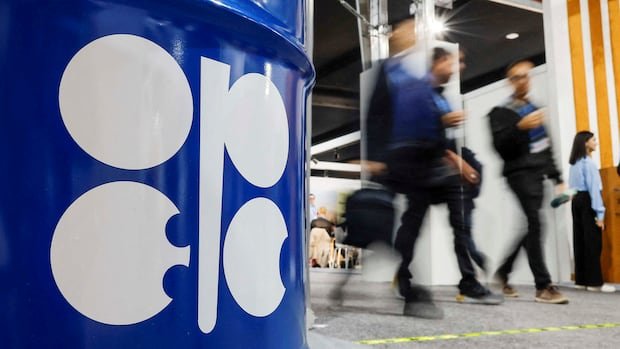
The United Arab Emirates has announced its decision to withdraw from the Organization of the Petroleum Exporting Countries (OPEC) and OPEC+ effective this Friday, citing an unparalleled energy crisis stemming from the Iran conflict that has exposed divisions among Gulf nations.
The UAE has been a longstanding member of OPEC, initially represented by its emirate of Abu Dhabi in 1967 and later as an independent country in 1971. OPEC+ was formed in 2016 as a coalition with other oil-producing nations.
While OPEC historically accounted for about 40% of global oil production, its influence has diminished in recent years due to increased output from the United States. The departure of the UAE, a major producer within the group, weakens OPEC’s authority over worldwide oil resources and accentuates a rift between the UAE and Saudi Arabia, the de facto leader of OPEC.
This move could afford the UAE the freedom to boost production once Gulf exports resume, as it would no longer be bound by OPEC production limits.
The UAE communicated its decision through the state-run WAM news agency, emphasizing a strategic and economic vision that includes enhanced investment in domestic energy production. The country aims to maintain a responsible and forward-looking role in global energy markets by gradually adjusting production in line with demand and market conditions.
Energy Minister Suhail Mohamed al-Mazrouei stated that the decision was made after a thorough review of the country’s energy strategies, clarifying that they did not discuss the matter with Saudi Arabia or any other country.
Escalating tensions with Saudi Arabia over political and economic issues in the Middle East, coupled with Iranian threats and attacks hampering export routes through the Strait of Hormuz, influenced the UAE’s departure from OPEC. This move aligns with U.S. President Donald Trump’s criticisms of OPEC for purportedly inflating oil prices.
Anwar Gargash, the UAE president’s diplomatic advisor, highlighted the weak political and military support from Arab states during the conflict with Iran. The UAE’s exit from OPEC had been anticipated due to disagreements over production quotas and global oil supply constraints.
Analysts underscore the UAE’s ability to bolster oil production outside OPEC, questioning Saudi Arabia’s role as the market’s primary stabilizer in the absence of the UAE’s spare capacity.
While the immediate market impact is expected to be minimal due to ongoing supply constraints from the Iran conflict, the long-term implications may lead to increased oil supply relative to demand once production resumes in the strait.
The shift reflects a changing geopolitical landscape where unilateral actions hold more sway than multilateral alliances, potentially introducing greater volatility into oil markets in the future.

