
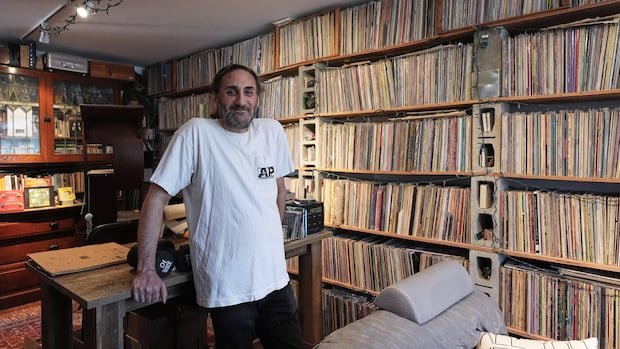
On July 8, 1989, a young music enthusiast named Aadam Jacobs attended the inaugural performance of an emerging rock band from Washington in Chicago, equipped with a portable Sony cassette recorder. Following a burst of guitar feedback, Kurt Cobain, aged 22, cordially introduced the band as Nirvana from Seattle before kicking off their set with the riff-heavy track “School.”
Jacobs discreetly captured the performance, showcasing the band in its raw, energetic state over two years before Nirvana’s global success with the album “Nevermind.” Over the span of four decades, Jacobs recorded over 10,000 concerts in Chicago and various other cities using increasingly advanced equipment. Currently, a team of dedicated volunteers in the U.S. and Europe is meticulously organizing, digitizing, and uploading these recordings to the expanding Aadam Jacobs Collection, a valuable online repository for music aficionados.
The collection is a treasure trove for fans of indie and punk rock from the 1980s to the early 2000s, a period when the genre transitioned into the mainstream. It features early performances by iconic artists such as R.E.M., The Cure, The Pixies, The Replacements, Depeche Mode, Stereolab, Sonic Youth, and Björk, alongside a sprinkle of hip-hop acts like Boogie Down Productions and rare shows by Phish.
All these recordings are gradually being made available for streaming and free download on the Internet Archive, a non-profit platform. The archive includes the enhanced audio of Jacobs’s original recording of Nirvana’s debut show.
Before sneaking his tape recorder into the Nirvana gig, Jacobs had been recording concerts for five years, starting as a teenager by taping songs off the radio. He gradually upgraded his equipment from a borrowed Dictaphone to a Sony Walkman-style recorder and eventually to digital audio tape and solid-state digital recorders.
Jacobs, who considers himself a music enthusiast rather than an archivist, saw documenting concerts as a way to combine his passion for music with attending live events. Initially facing resistance from club owners, he eventually gained acceptance as a staple in the music scene, with many venues allowing him to record shows for free.
After a documentary about Jacobs was released in 2023, a volunteer from the Internet Archive proposed preserving his collection. This led to the ongoing project where volunteer Brian Emerick transfers analog recordings to digital formats, with over 5,500 tapes digitized since late 2024. The process involves multiple volunteer engineers providing metadata and enhancing audio quality before uploading the shows to the archive.
Despite challenges in identifying song titles, volunteers work diligently to ensure accurate documentation. While Jacobs is willing to remove recordings upon request due to copyright concerns, most artists appreciate having their work preserved in the collection.
As the project continues, legal expert David Nimmer suggests that lawsuits are unlikely given that neither Jacobs nor the archive profits from the endeavor. The Replacements even incorporated Jacobs’s 1986 show recording into a live album released in 2023. Although Jacobs has stopped recording due to health issues, he still enjoys online recordings from a new generation of fans capturing live music experiences.

