
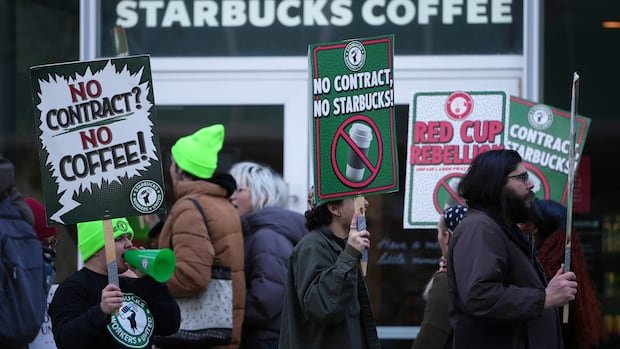
Baristas united in a union from 65 Starbucks locations nationwide in the U.S. initiated a strike on Thursday to amplify their efforts in reaching a collective bargaining agreement concerning pay and staffing issues.
Since negotiations halted in December 2024, there have been no active talks between the union and the company. Starbucks Workers United (SBWU) stated on their website that Starbucks put forward a new economic package in April, which was rejected by union members.
Following the rejection, Starbucks issued a statement on April 25, expressing disappointment with Workers United for presenting an incomplete framework for single-store contracts, hindering progress despite extensive negotiations and proposals exchanged.
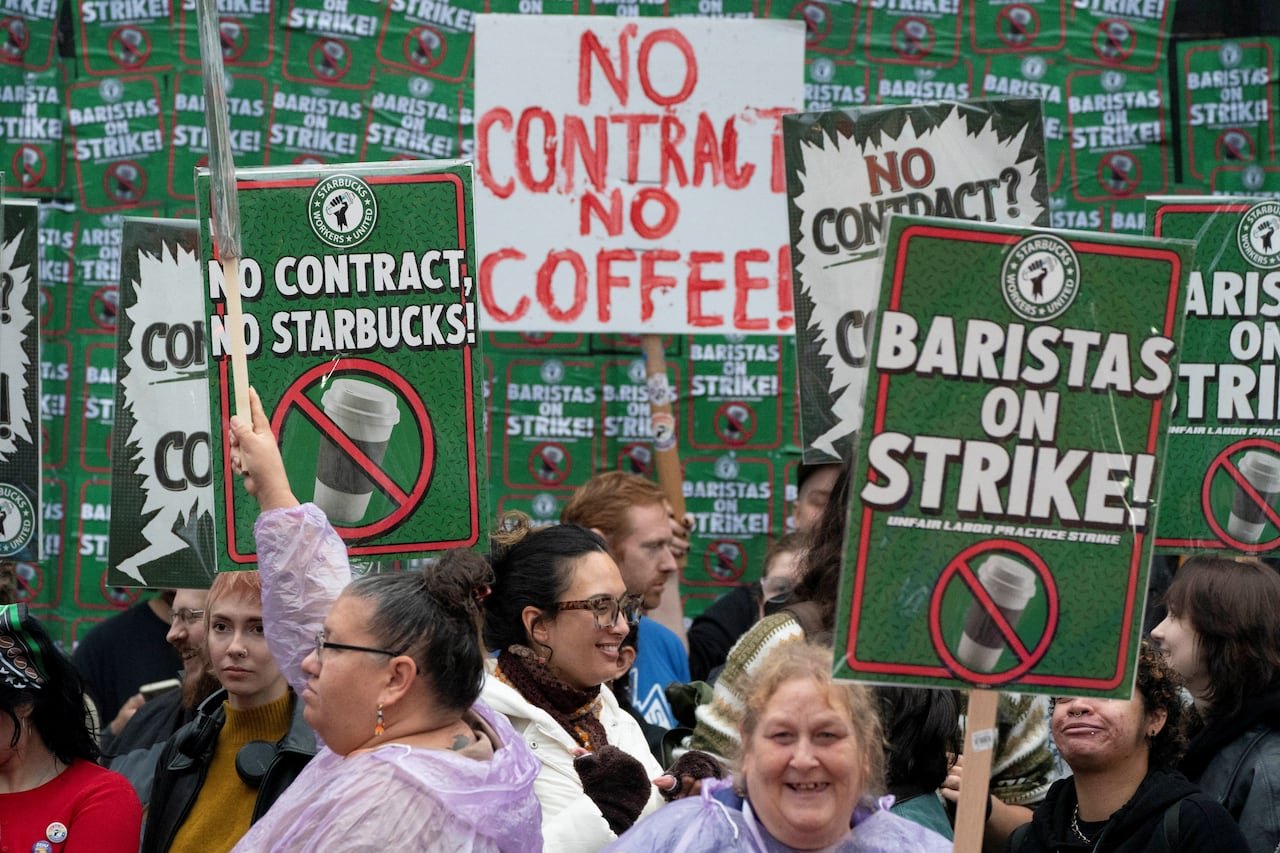
More than 1,000 Starbucks employees in 40 cities across the U.S. are participating in the strike, as confirmed by the union. The strike coincided with Starbucks’s Red Cup Day on Nov. 13, traditionally marking the start of the busy holiday season for the coffee chain.
The strike was prompted by six months of Starbucks’ failure to address demands for improved staffing, higher wages, and resolution of numerous unfair labor practice charges, according to SBWU. When approached for comment by CBC News, the SBWU did not respond in time for publication.
In response to the strike, Starbucks spokesperson Jaci Anderson informed CBC News that disruptions from the strike affected less than 1% of the company’s coffeehouses.
Key Demands
SBWU highlighted unmet demands from Starbucks, including concerns about understaffing and wage increases.
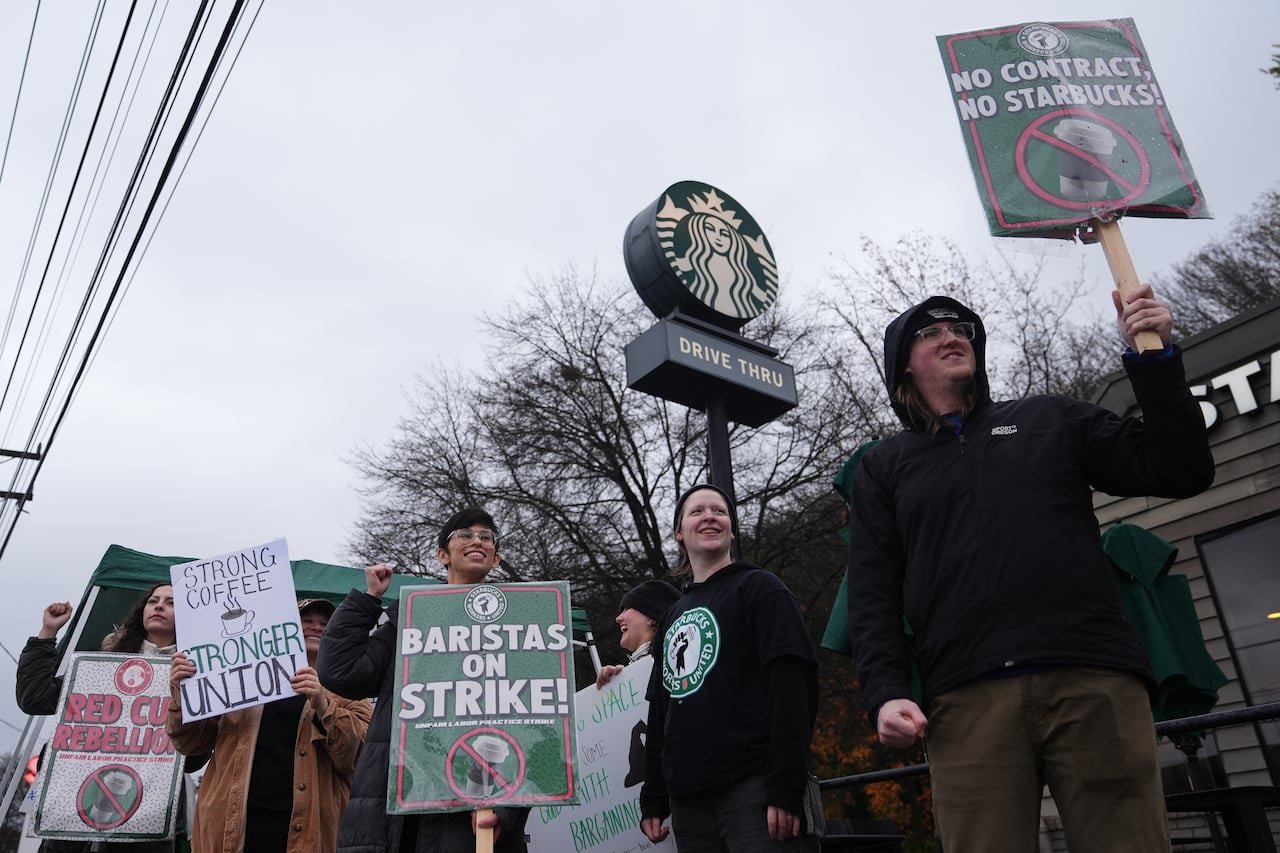
The union emphasized the need for progress in negotiations, stating, “We have achieved significant victories as a union, but Starbucks’ lack of cooperation in contract talks is hindering our advancement.”
Starbucks, in its response, expressed disappointment that Workers United, representing less than 4% of their workforce, opted for a strike instead of returning to negotiations.
SBWU argued that going back to the bargaining table would be futile without Starbucks offering proposals that align with the union’s demands.
Starting with the first Starbucks unionized store in Buffalo, New York, in 2021, SBWU has expanded to represent thousands of baristas. Currently, 550 out of approximately 17,000 Starbucks locations in the U.S. are unionized with SBWU.
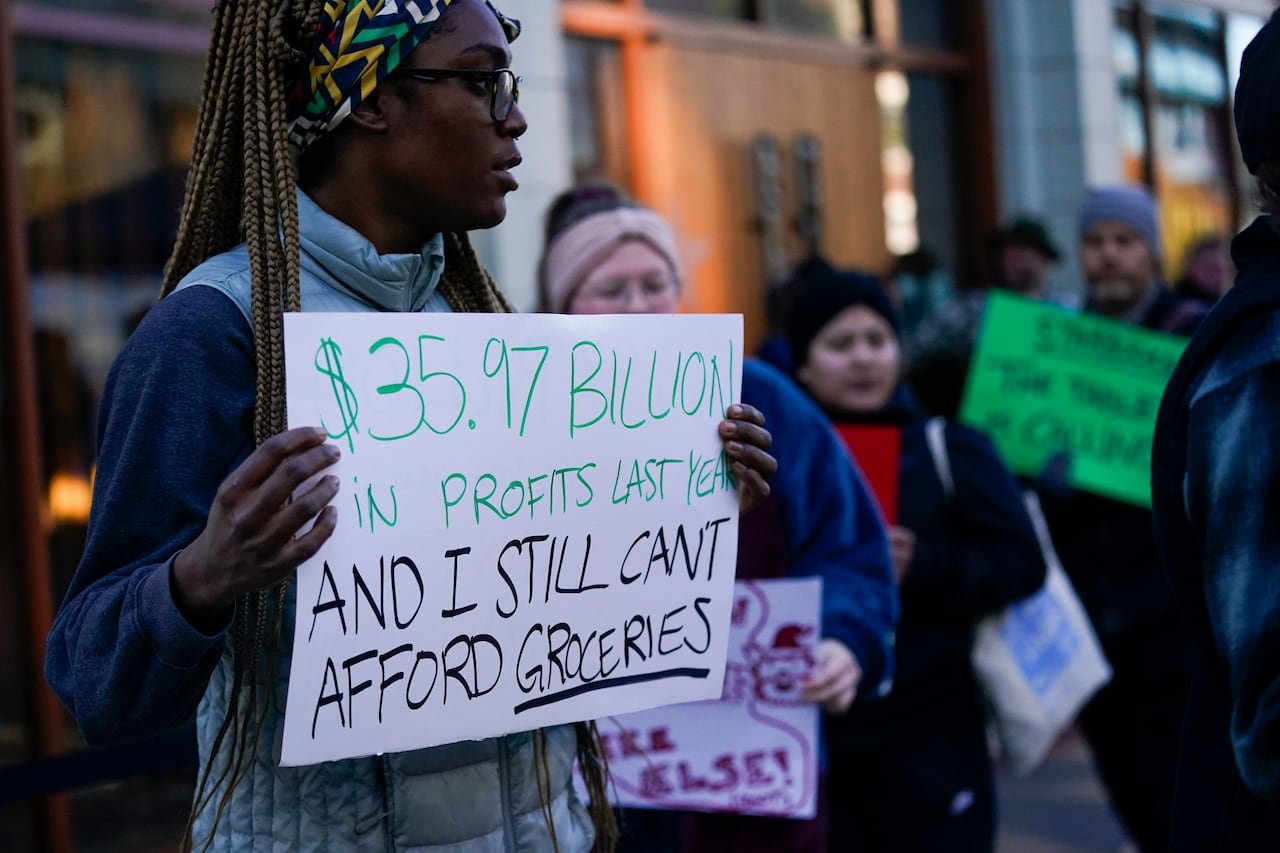
Barry Eidlin, a sociology professor at McGill University, attributed the union’s growth to its grassroots approach, deviating from conventional union strategies.
While the outcome regarding wage increases and staffing improvements remains uncertain, Eidlin acknowledged the union’s substantial achievements through its grassroots organizational tactics in recent years.
In September, Starbucks closed hundreds of locations across North America and laid off 900 non-retail employees.
CEO Brian Niccol addressed the closures, stating that while

