
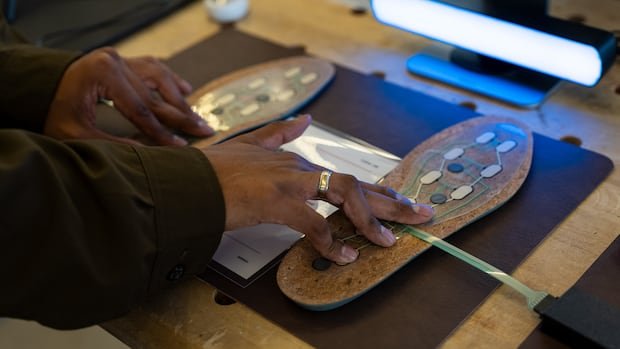
A Toronto-based startup named Aurmada is joining the trend of incorporating AI technology into clothing and footwear to enhance interactivity. They are exploring ways to integrate AI into garments to monitor various aspects such as gait and proximity detection. CEO Zavosh Zaboliyan believes that wearable technology is becoming more prevalent in Canada, with nearly two in five Canadians owning such devices. While smartwatches dominate the market, Aurmada aims to integrate tech directly into clothing items.
The inspiration behind Aurmada’s creation stemmed from Zaboliyan’s personal experience with a car accident injury. Frustrated with the slow process of obtaining medical feedback, he envisioned a solution that could provide real-time data about his physical condition. By embedding AI into clothing, Aurmada seeks to enable features like vital sign monitoring, movement tracking, and object detection to enhance user experience and safety.
At a recent technology showcase in Toronto, Aurmada unveiled prototypes featuring shoe sole sensors for weight distribution analysis and clothing-embedded sensors that function as virtual assistants. The company is also exploring fabrics with metal elements like copper and silver to shield sensors from external signal interference. Additionally, they plan to incorporate lightweight solar panels into the fabric for powering the integrated technology.
In addition to AI-enhanced products, Aurmada offers innovative non-AI items such as bulletproof shirts and electrically conductive socks for muscle stimulation. The company envisions a future where AI-enhanced features become mainstream in fashion and serve practical purposes, especially in fields like security and emergency response.
While the integration of AI into clothing presents exciting possibilities, concerns about data privacy and consumer acceptance remain significant hurdles. Experts predict a gradual adoption of AI-enhanced clothing by brands over the next few years, but normalization may take time. Collaborations between fashion and technology industries could lead to more stylish and widely accepted wearable technology in the near future.

