
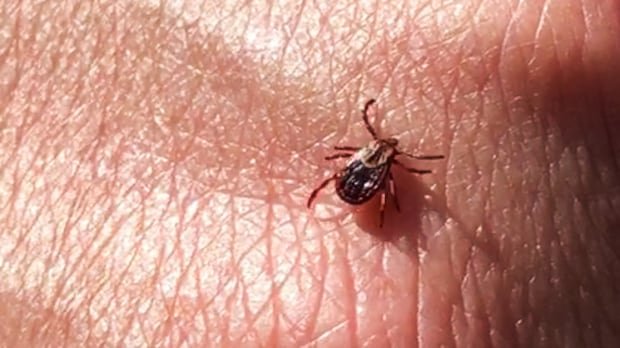
According to a recent study conducted by the University of Ottawa, the application of woodchips on woodland trails can lead to a significant decrease in local tick populations.
The study indicates that a simple solution like this could help lessen the risk of tick bites and subsequent Lyme disease infections for hikers in wooded areas.
For the research, two locations within Ottawa’s Greenbelt were selected: the Mer Bleue sector in the east and the Stony Swamp sector in the west.
Researchers treated 20 sections of trails, each 50 meters long, with either untreated woodchips or woodchips treated with deltamethrin, a pesticide.
The findings revealed that using untreated woodchips resulted in a 50% reduction in tick numbers, while using pesticide-treated woodchips led to a 99% decrease in tick populations, as reported by Katarina Ost, a team member.
Ost mentioned on CBC Radio’s Ottawa Morning that the study yielded valuable insights.

UOttawa researcher Katarina Ost explains how they tested the materials on Ottawa-area trails.
Effectiveness of Woodchips
Woodchips are effective in deterring ticks because these tiny arachnids usually climb vegetation, such as grass, to attach to hikers or their pets. By placing woodchips on the trail, the growth of the necessary climbing vegetation is prevented.
Ost also mentioned that woodchips are suitable for wide, heavily used trails with high tick activity, making them a practical solution on a larger scale.
-
Audio
Tick season is here: what to know
-
Scientists are warning Canadians to get ready for a U.S. tick invasion this year
Ost explained that the significant impact of the pesticide was not surprising, mentioning that deltamethrin does not pose a risk to pets walking on the wood chips since it remains stationary once applied.

