
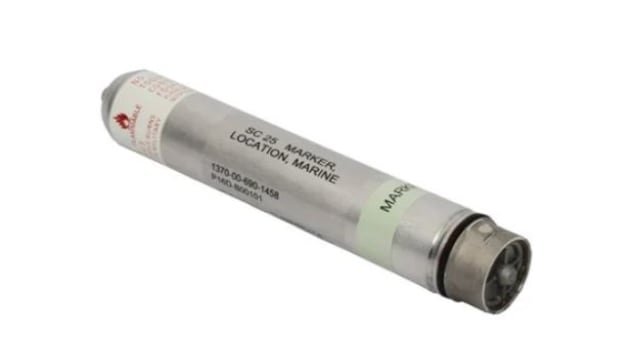
The military is advising the public to report any suspected marine location markers and ordnance found during beach cleanups in Nova Scotia rather than attempting to touch or move them. Despite appearing old or harmless, these metal tubes can still present a significant danger, as emphasized by 14 Wing Greenwood’s explosive ordnance disposal team in a recent news release.
Sgt. Ryan Doyle, the team’s deputy commander, highlighted that these markers can ignite with intense heat, reaching temperatures exceeding 800 degrees Celsius. Instances have occurred where individuals inadvertently activated the markers by moving them, leading to potential risks without any reported injuries.
Marine location markers are pyrotechnic tools used for marking positions on water surfaces during search and rescue operations, navigation, and training. Doyle explained that they utilize red phosphorus to produce a highly visible flame and smoke, which can easily reignite when exposed to air.
Even if a marker appears inactive or covered in debris, residual phosphorus may still be present, posing a risk if disturbed. 14 Wing Greenwood cautioned against moving or transporting these items, as any disruption to the protective coating could result in unexpected reignition.
In the event of encountering a marker, individuals are advised to maintain a safe distance, take photos, mark the location, and inform local law enforcement without attempting to handle or dispose of the item themselves. Beach cleanup efforts by groups like Scotian Shores have encountered such markers, emphasizing the importance of proper reporting and disposal procedures to prevent potential hazards.
Efforts to streamline the reporting process for marine location markers have been suggested, with calls for direct communication between cleanup groups and ordnance disposal teams to expedite the removal of hazardous items. Improved coordination and follow-up procedures are essential to ensuring prompt and effective responses to such findings, enhancing overall safety measures in coastal regions.

