
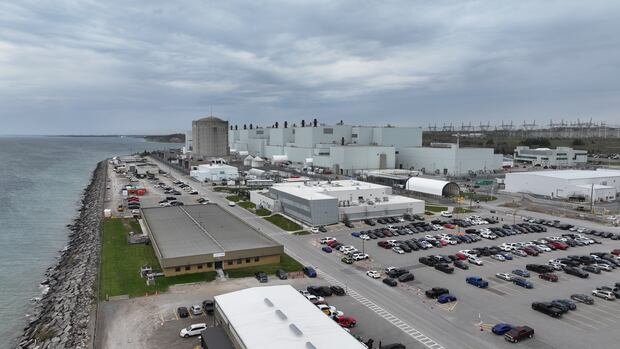
Carter Albis has had a lifelong interest in nuclear energy, stemming from his proximity to the Pickering Nuclear plant during his childhood. This fascination led Albis to enroll in Ontario Tech University’s nuclear engineering program, situated near the Darlington Nuclear Station in Bowmanville. Albis sees a promising career in nuclear energy, considering it as the cornerstone of Ontario’s energy sector.
Recently, the Ontario and federal governments announced a joint investment of $3 billion to construct Canada’s first small modular reactors (SMRs) adjacent to the Darlington power plant. This project is estimated to create 18,000 construction jobs in the region and sustain 3,700 energy-related jobs annually for the next 65 years.
The SMRs are projected to inject $500 million into the Canadian supply chain each year, contributing over $38 billion to Canada’s GDP over the next 65 years through their construction, operation, and maintenance. The initiative, spearheaded by Ontario Power Generation, has a total projected cost of $20.9 billion, with the initial reactor’s construction cost estimated at $7.7 billion.
Local businesses in the area are already benefiting from the project, with Clarington’s board of trade executive director, Bonnie Wrightman, noting the positive economic impacts being felt. This initiative is expected to boost various sectors in the region, with approximately 80% of the project spending directed towards Ontario companies.
The construction of the SMRs is anticipated to put Clarington on the global stage, as these reactors will be the first of their kind built within the G7. The project, considered of national interest, is set to fast-track development, attracting international attention and investment to the municipality.
Clarington Mayor Adrian Foster emphasized the project’s potential to alleviate economic uncertainties, suggesting that workers from struggling sectors, such as the automotive industry, could retrain to contribute to the SMR project. Foster highlighted the importance of post-secondary institutions in training individuals to fill the positions created by the Darlington project.
The first of four SMRs is scheduled to be operational by 2030, producing 1,200 megawatts of electricity, enough to power 1.2 million homes. The anticipation is high for the transformative impact of SMRs on the region’s economy and energy landscape.

