
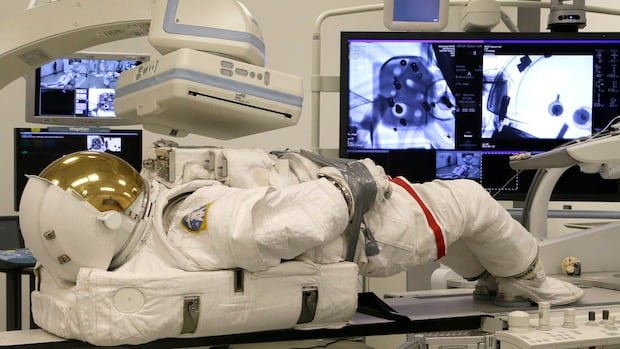
Innovative medical tools like ear thermometers, portable ultrasounds for iPhones, and virtual doctor appointments have roots in space technology adaptation. Future deep space exploration is expected to introduce new healthcare innovations on Earth, such as portable medical technology and robotic care. These advancements are particularly promising for remote and underserved communities.
Dr. Dave Williams, a former emergency room doctor and astronaut from Toronto, highlights the potential transferability of lessons from lunar habitats to deliver remote medical care in regions like northern Canada. Dr. Farhan Asrar, an associate dean at Toronto Metropolitan University’s school of medicine, along with other researchers, are studying health-care innovations related to upcoming deep-space missions, including lunar and Mars exploration.
As deep-space missions will limit astronauts’ ability to return to Earth for medical care, there is a growing need for faster communication technologies to enable virtual care. The prolonged distances involved will necessitate increased reliance on robot- and AI-supported care. Additionally, advancements in wearable technology, robotic limbs, and exoskeletons are anticipated to benefit individuals at risk of falling or those with disabilities.
Space medicine and terrestrial medicine share a symbiotic relationship, where advancements in one field drive progress in the other. Portable medical technology becomes essential for prolonged space missions due to limitations on bulky equipment transport. Similarly, lighter and more versatile medical tools can aid physicians in remote and disaster-affected areas on Earth.
While space medical technology can benefit Earth, the reverse is also true, as new tools and medicines are typically developed and tested for terrestrial applications before space exploration. Organizations like the Canadian Space Agency prioritize technologies with potential benefits for both space and Earth, ensuring a dual-purpose approach to innovation.
Although robotics and automated healthcare innovations are progressing, challenges like costs and regulatory hurdles slow down their implementation on Earth. Despite this, recent space missions like Artemis II have sparked enthusiasm for faster innovation in healthcare. The success of such missions is expected to drive more interest in aerospace medicine training and attract young professionals to the field.

