
It is often expressed that as long as someone is remembered and their name is spoken, they have not truly passed away.
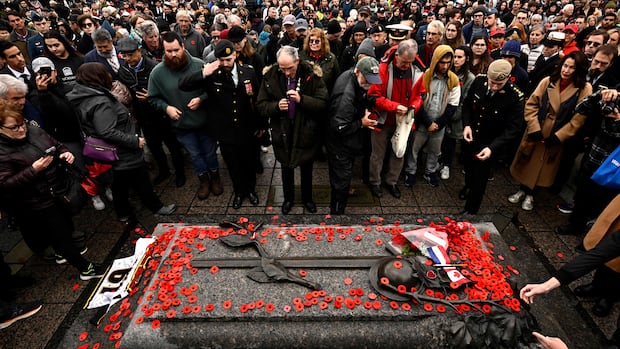
This notion holds particularly true for Canada’s Unknown Soldier, who rests beneath the vigilant gaze of his fellow Great War soldiers at the base of the country’s National War Memorial, located in the nation’s capital.
A casualty of World War I, whose identity remains intentionally undisclosed, he lost his life on a faraway French battlefield over a hundred years ago.
Serving as both a tragic figure and a profound emblem, the Unknown Soldier represents — in his anonymity — all those who were lost amidst the chaos and destruction of warfare.
He is a soldier whose commitment to the nation remains eternal.
His identity, including his name and physical appearance — all the traits that define our humanity — were taken from him in the figurative and, at times, literal slaughterhouse of the Western Front, all in the name of King and country during a conflict that is scarcely remembered today.
Once, to paraphrase the timeless poem In Flanders Fields, he lived, experienced the dawn, witnessed the sunset, and was loved by a family that eventually passed away without knowledge of his fate.
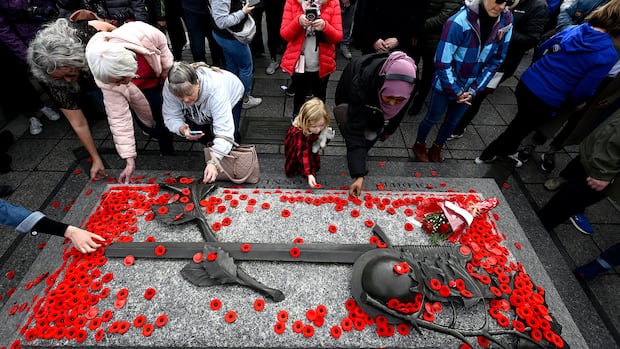
With much of Canada’s Remembrance Day ceremony taking place around the Tomb of the Unknown Soldier, CBC’s Murray Brewster breaks down its history, symbolism and the challenge to maintain its sanctity as technology evolves.
As Canada embarks on rearmament and other nations seek to assert dominance globally, we are compelled once more to consider the grim prospect: the potential onset of another significant conflict.
Russia’s persistent assault on Ukraine has made it clear that, barring a nuclear disaster, extended warfare and mass casualties on a large scale remain feasible even in the 21st century.
Since the Unknown Soldier of Canada was interred in Ottawa twenty-five years ago, advancements in DNA technology have surged, integrating scientific certainty into our daily lives in ways that past generations could not have envisioned.
This raises the question — if a future conflict arises, will there ever be another unknown soldier?
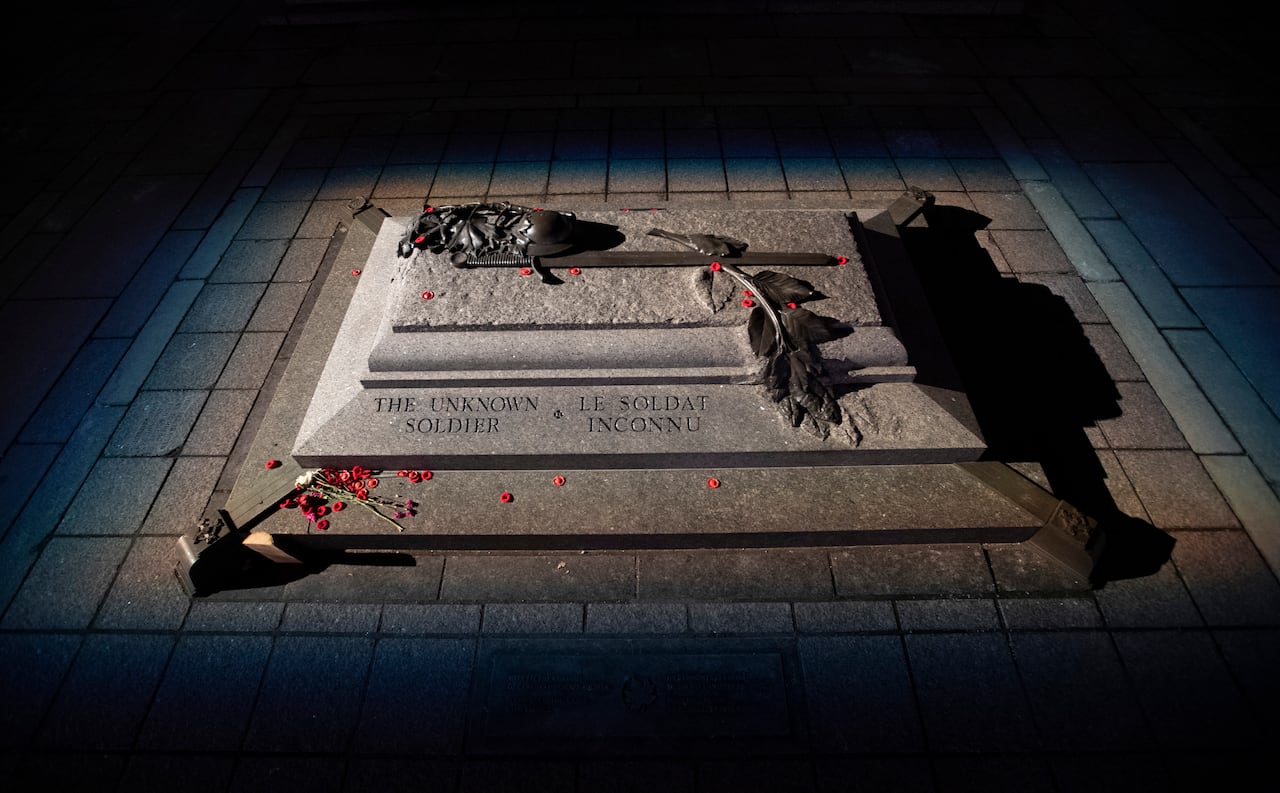
The Tomb of the Unknown Soldier is illuminated at night in Ottawa, Monday, Nov. 9, 2020. (Adrian Wyld/The Canadian Press)
Missions — and technology — have changed
More importantly, would Canadians even accept a contemporary unknown soldier? And would families today be willing to remain unaware of a loved one’s fate?
The answer is — probably not.
The experiences in Afghanistan and years of peacekeeping missions differed significantly for Canadians. Casualties returned home to their families, unlike during the world wars.
The Department of National Defence’s Casualty Identification Program, established in 2007, aims to restore identities to Canada’s roughly 29,000 missing and unidentified soldiers from the previous century’s wars.
This initiative focuses on recently discovered skeletal remains and previously unknown graves of Canadian soldiers, all predating 1970.
Consequently, Renee Davis, a historian within the Defence Department, dedicates a significant amount of time in cemeteries searching for unknown soldiers.
She assists in gathering research for the identification initiative.
“Every one of these stones signifies a person,” Davis remarked during a recent visit to Canada’s National Military Cemetery at Beechwood in Ottawa. She pointed out the unique crests and the varying shades of the grave markers.
“From the headstones, you can actually discern their entire narrative, which speaks volumes about remembering who they were.”
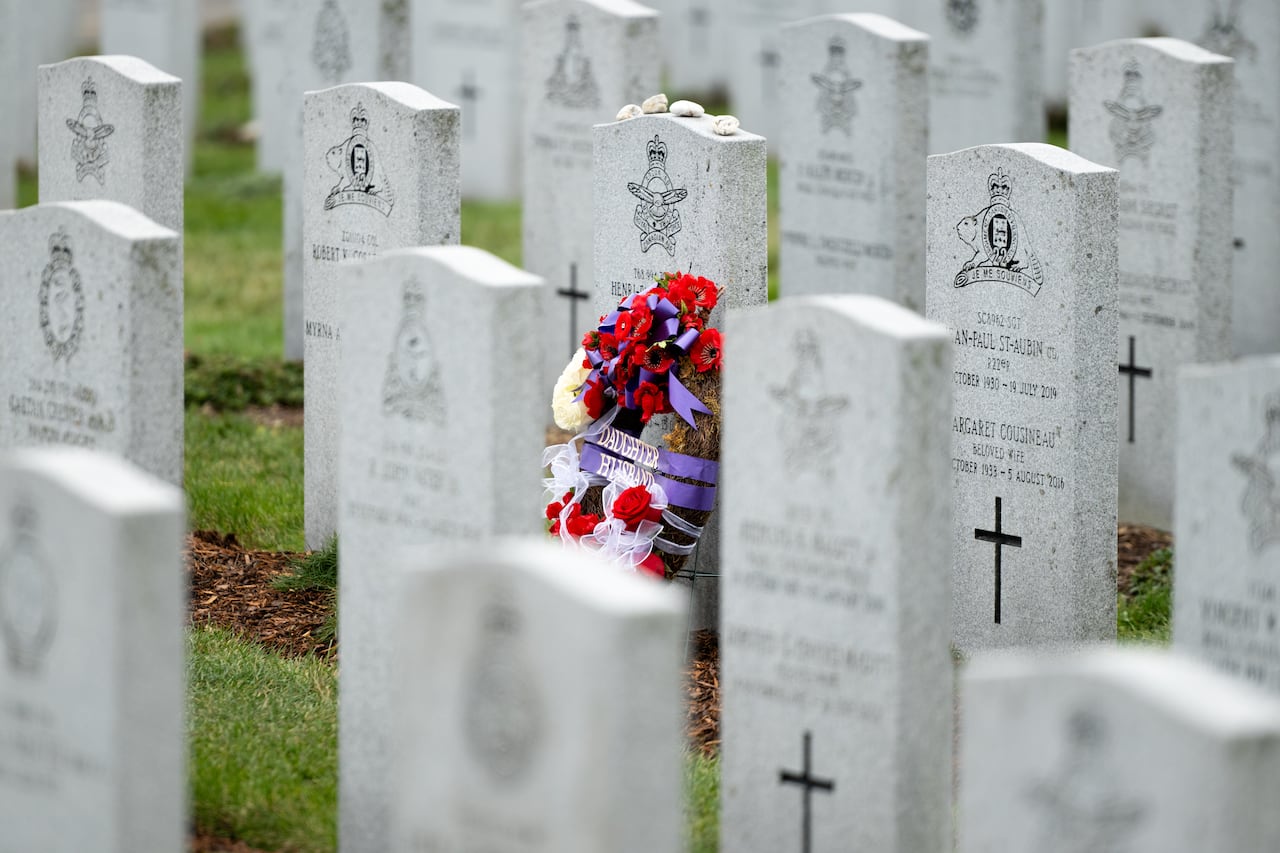
A wreath is seen against a tombstone following Remembrance Day celebrations at the National Military Cemetery at Beechwood in Ottawa, on Saturday, Nov. 11, 2023. (Spencer Colby/The Canadian Press)
Canada and the United States are leading Western nations in efforts to identify war casualties from conflicts of the last century. The United Kingdom and France also operate their own programs but with stricter limitations, particularly concerning DNA testing.
In Germany, the task falls to the non-profit Volksbund Deutsche Kriegsgräberfürsorge (German War Graves Commission), which has spent decades locating, exhuming, identifying, and reinterring German soldiers across Europe. The commission estimates that over two million German soldiers are still unaccounted for.
Powerful symbols
A forensic anthropologist on Canada’s casualty identification team acknowledges the significance of the symbolism but often grapples with the idea of the unknown soldier.
“It completely contrasts with my work,” Sarah Lockyer shared in a recent interview with CBC News.
“It stands in stark opposition to one of the primary goals of forensic anthropology, which is to identify unknown individuals and restore their names and identities. It runs counter to that philosophy. Admittedly, I still struggle with having to do the exact opposite of what my field typically entails.”
Although it is scientifically feasible to identify the Unknown Soldier, Canada consented when the body was repatriated in May 2000, not to pursue DNA testing. The Commonwealth War Graves Commission only relinquishes its war dead from unknown graves if the accepting nations pledge not to attempt identification.
“The unknown soldier was exhumed from Cabaret Rouge near Vimy Ridge, and returned to Ottawa,” Davis explained.
“Efforts were made to ensure a relatively randomized selection of individuals were potential candidates prior to the final decision on who would be exhumed and brought home. The intention was to guarantee that he would remain an unknown soldier indefinitely, ensuring he could not be identified.”

