
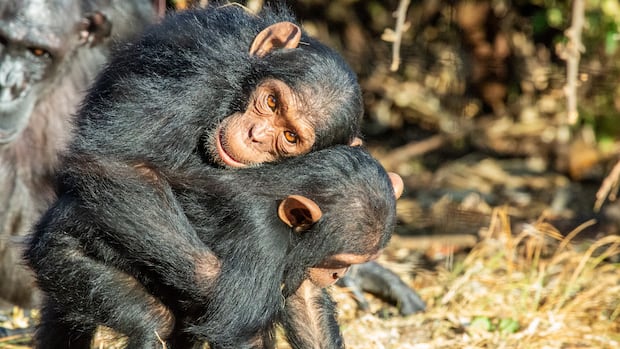

What methods do great apes utilize to maintain harmony? A gentle touch, a warm embrace, or even a bit of playful affection can significantly help.
Recent research indicates that both chimpanzees and bonobos employ physical affection as a means to foster “social tolerance” and avert conflicts in situations that may lead to stress.
Their diplomatic behaviors encompass hugs, kisses, pats, and even playful nibbles.
“Everything mentioned and more,” stated lead researcher Jake Brooker during his conversation with As It Happens host Nil Kӧksal. “They engage in a significant amount of genital touching as well.”
The results, which are published on Wednesday in the journal Proceedings of the Royal Society B: Biological Sciences, provide fresh insights into how our closest relatives sustain strong social connections during challenging times.
Pre-snack cuddles
Brooker, a psychologist and researcher on great apes at Durham University in the UK, noted that it was already established that great apes utilize positive touch to comfort one another after conflicts.
“When an individual displays clear signs of distress, we observe that many others will approach to offer comforting contact, similar to human behavior,” he remarked.
However, researchers began to observe these affectionate actions “occurring in other stressful situations as well.”
They appeared to become particularly affectionate when threatened by external groups, Brooker explained — or just before mealtime.
“Great apes encounter significant stress throughout their lives,” he noted. “They often experience considerable tension and stress within their groups, particularly concerning competition and resource allocation.”
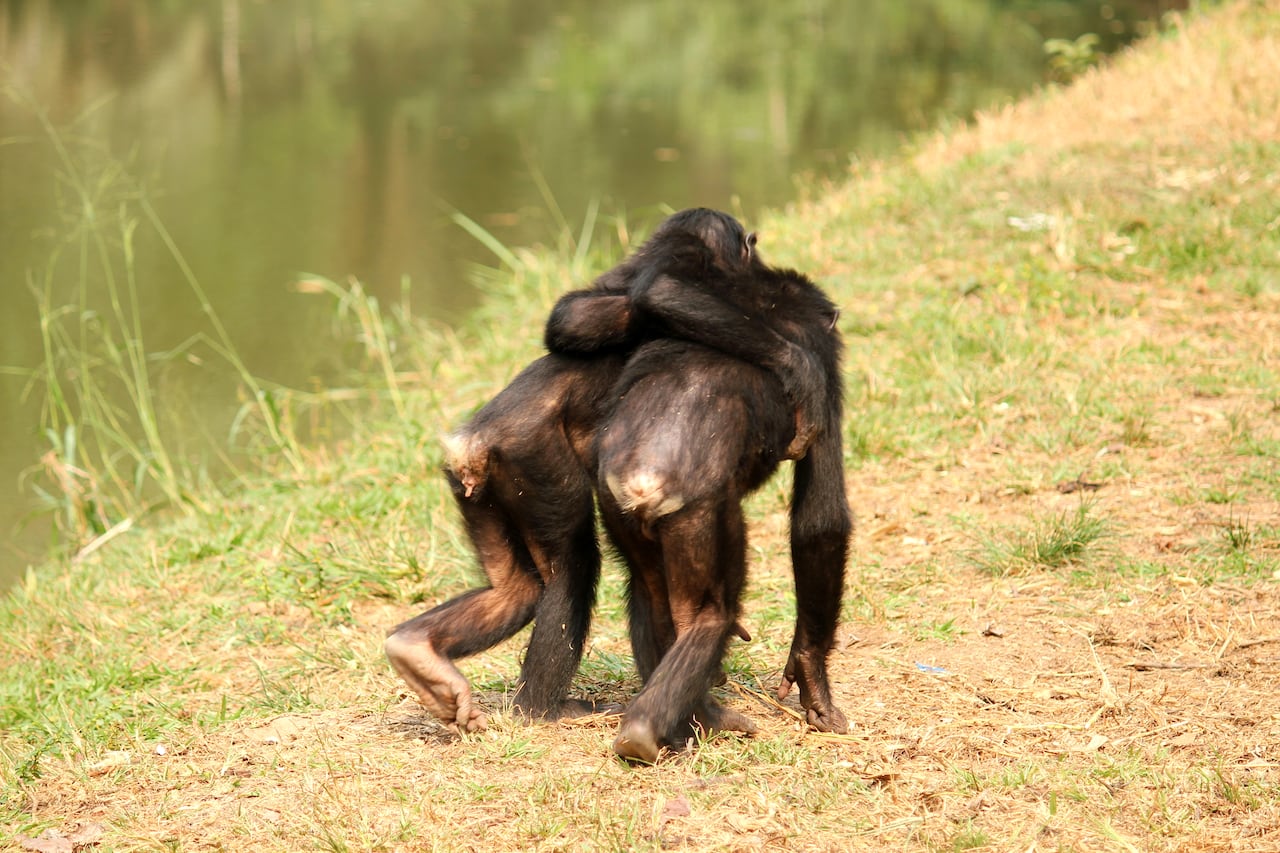
Two orphan juvenile bonobos in the study wrap their arms around each other. (Zanna Clay/Lola ya Bonobo Sanctuary)
To investigate this behavior, the researchers observed five groups of semi-wild bonobos and chimpanzees residing in great ape sanctuaries in the Democratic Republic of Congo and Zambia.
They began providing the primates with peanuts at set intervals, allowing them to anticipate their meals, and then noted their interactions during the five minutes leading up to snack time.
“We noticed that they engaged in many of these behaviors right up until feeding time,” Brooker mentioned. “Moreover, those who exchanged the most contact were also the ones who shared the food afterwards.”
By fostering trust in advance, the apes are able to prevent conflicts over food, as concluded by the study. This, in turn, enables them to consume more food for a longer duration.
-
Chimps are sticking grass and sticks in their butts, seemingly as a fashion trend
-
Great apes get a kick out of ‘playfully teasing’ each other, study finds
However, similar to humans, social dynamics can be complex.
One chimpanzee group did not follow the pattern, showing no link between pre-snack cuddling and peaceful feeding. The authors of the study suggest that unique group histories and previous conflicts may influence how positive contact is utilized within each group.
Chimps overcome stereotypes
Julie Teichroeb, a primatologist at the University of Toronto, finds it particularly noteworthy that both chimpanzees and bonobos exhibited this positive touching behavior.
This is significant because, according to her, chimps are often perceived as being far more aggressive than their bonobo relatives.
For instance, bonobos have been known to collaborate with external groups, while chimps frequently engage in violent rivalries, even resulting in civil wars.
“These two species are often compared due to their stark differences in aggression towards out-group individuals, making it intriguing that they both utilize touch similarly to enhance within-group tolerance,” Teichroeb, who was not part of the study, explained via email to CBC.
“This increases the likelihood that our common ancestors employed the same strategies to mitigate social conflict.”
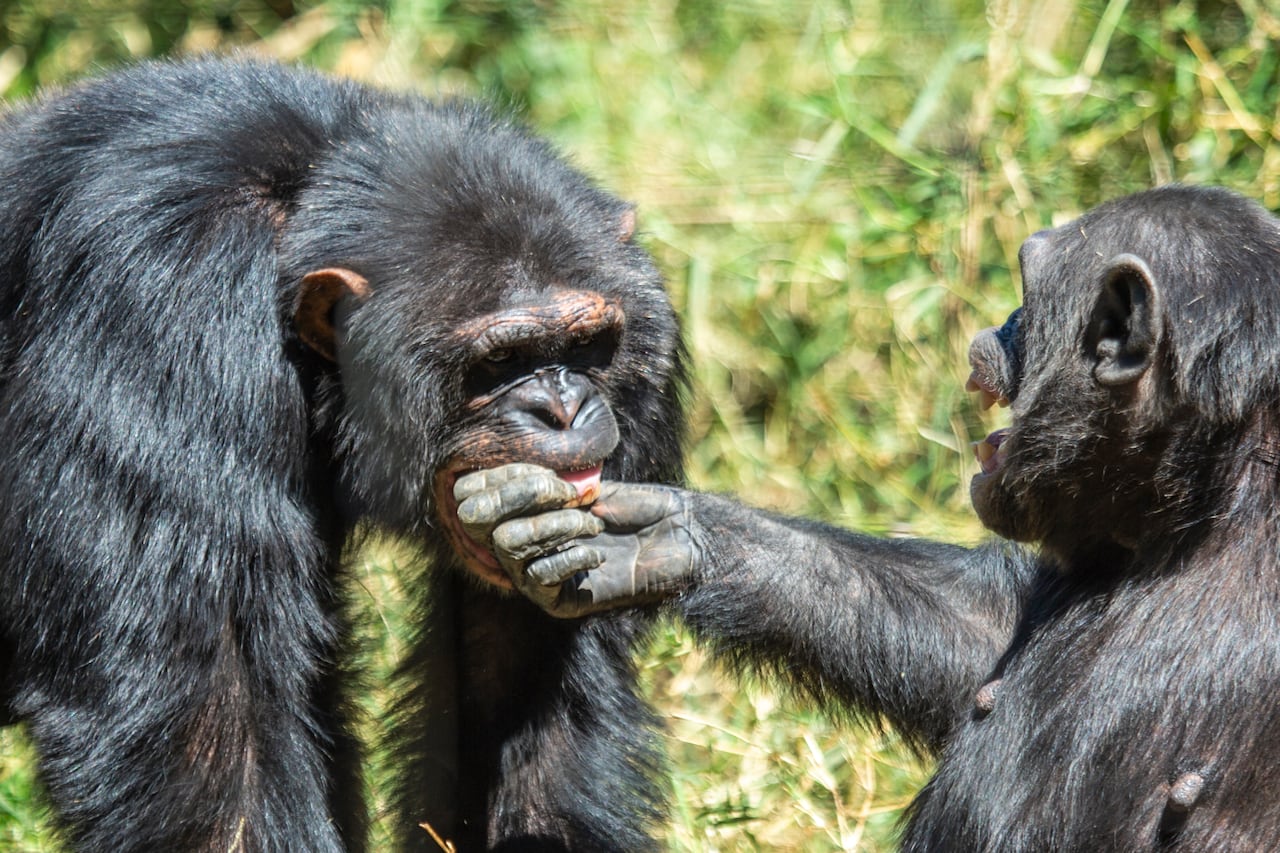
Male chimpanzee Sims, left, gently nips on female Careen’s hand, a form of contact common during tense competitive periods in chimpanzees. (Jake Brooker/Chimfunshi Wildlife Orphanage Trust)
Interestingly, the study revealed that chimpanzees tended to engage in more varied affectionate behaviors than bonobos, including higher-risk actions like gentle nibbles or placing fingers in each other’s mouths, particularly among males.
“This suggests that more aggressive species may require greater displays of reassurance to foster social tolerance,” Teichroeb noted.
The takeaway? Embrace your friends
Brooker emphasizes that there is a pertinent lesson for humans in this behavior.
“I recall that in school, any form of physical contact among boys was often condemned. It was almost stigmatized,” he reflected.
“If it occurs between friends who share a deep understanding, it can significantly enhance communication and bonding. It’s potentially something that people are overlooking.”

