

Canada is set to make its official debut in the Eurovision phenomenon, with insights from a Canadian superfan behind the fringe show “A Canadian Explains Eurovision To Other Canadians,” who shares with As It Happens host, Nil Koksal, and newcomers to the concept, the significance of this development.
The announcement of Canada’s participation in the 2027 Eurovision Song Contest was music to the ears of Matti McLean.
A dedicated fan of the global music competition, co-host of the Think About Eurovision podcast, and creator of the Fringe Festival show A Canadian Explains Eurovision to Other Canadians, McLean has spent years advocating for this moment to become a reality.
“What I’ve always adored about Eurovision is the chance to catch a glimpse of different countries, their cultures, and their music,” McLean expressed to As It Happens host Nil Köksal, elaborating on his enthusiasm. “Eurovision is just so unpredictable. The performances, the outrageous costumes, and the overall extravagance are things I believe are unparalleled elsewhere — it truly is the Olympics for music.”
The announcement, aptly made on Canada Day, follows closely behind CBC’s confirmation of its acceptance as a full member of the European Broadcasting Union (EBU), which oversees the contest.
McLean is not alone in his enthusiasm for the flamboyant and extravagant talent show; last year, Canada finished among the top three in the “Rest of the World” voting category. Canadians were also among the largest ticket purchasers outside of Europe, with many traveling to Vienna for both the semifinals and the grand final in May.
The show’s history of propelling careers is hard to ignore. Countries send some of their most talented musical artists to compete, with past contestants like ABBA and Canada’s own Céline Dion, who represented Switzerland in 1988, going on to achieve global fame.
In an industry where Canadian musicians often find themselves overshadowed by their American counterparts, McLean expressed his eagerness for Canada to demonstrate its potential as a significant artistic force on the global stage.
Canada’s debut coincides with a particularly tense period for the competition. This year’s event is unfolding amidst geopolitical tensions, as Spain, Ireland, the Netherlands, Iceland, and Slovenia have all opted to boycott due to Israel’s involvement.
Nonetheless, McLean conveyed to Köksal that there is no better moment for Canada to join what he refers to as the “Olympics for the arts.”
Here is a portion of their discussion:
Matti, is this your dream come true?
This is an extraordinary moment — not only for me, as it feels surreal, but it also presents a fantastic chance for Canadian talent to shine on this entirely new platform, which I find incredibly thrilling.
You describe it as surreal. Why do you think it is happening now?
First, geopolitical factors, of course, as the EBU has encountered scrutiny regarding the inclusion of specific nations. Consequently, they have lost some members. Therefore, they are seeking new participants to fill those gaps. Additionally, Canada is aiming to establish a distinct identity separate from America, and Europe seems to be the ideal option for that.
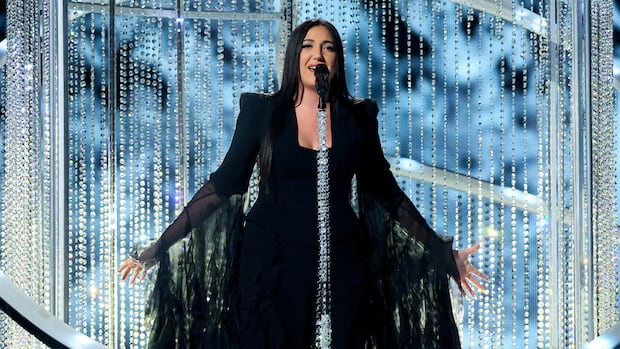
Israel has been confirmed for the 2026 Eurovision song contest after the European Broadcasting Union stated that most members opted against a vote on participation, leading four countries — the Netherlands, Ireland, Spain, and Slovenia — to boycott the event due to the war in Gaza.
Considering the current global interest in Eurovision — while it remains popular, is it experiencing a decline in its appeal? Is it losing its relevance for some audiences?
I believe its relevance continues, although we are indeed stepping into a complex situation. A significant amount of damage has been inflicted on the contest and the EBU’s reputation overall. It’s challenging to disentangle the contest from political issues. It is crucial that we confront these matters rather than ignore them. Many individuals are dissatisfied with how the situation has unfolded since 2024, and even longer. This raises questions about many underlying processes. However, my true passion lies with the artists — those individuals who have the potential to truly make a difference and be part of something larger than themselves.
What would you say to those who are curious about your deep appreciation for the competition?
What I have always cherished is the ability to catch a glimpse of different cultures, people, and their music. There is something profoundly universal about experiencing another person’s life and humanity as expressed on stage. Eurovision is incredibly unpredictable. The performances, the wild costumes, the extravagance — such things are hard to find in any other venue. It truly is the Olympics for music.
And then there’s the spectacle. The camp and the gimmicks you mentioned — it is undeniably extravagant. Which performances have you noted that Canadian hopefuls should study and learn from?
We’re focusing on the classics. At any Eurovision gathering, three names will invariably be mentioned. First, Verka Serduchka, a Ukrainian drag performer, exemplifies camp. She appears in a mirrorball dress with a 69 on the back — it’s the epitome of camp and excess. She embodies everything Eurovision represents; it’s absurd. Next is Loreen, the Queen — she is always mentioned. Lastly, Käärijä’s “Cha Cha Cha” frequently comes up. These three are essential viewing and provide a wide array of styles to explore, from campy soul to heavy metal dance pop. It’s astonishing.
For those contemplating Canada’s potential in Eurovision, considering our great musical talent, do you believe we have the level of camp and whimsy needed? What would you say?
Canada actually boasts a remarkable history of producing outstanding talent. We excel in camp. Canada has a rich background in humor and has delivered many exceptional pop acts. We could send — for instance, B44. There are countless quirky and exciting possibilities we could explore or present in a unique and fun manner, making this an extraordinary opportunity.
Do you think we can win in our inaugural year?
Honestly, it seems unlikely. Here’s why: the only country to achieve that feat is Serbia, which won in 2008, but they had previously participated under Serbia and Montenegro and had been performing consistently well. Australia is the closest to winning on their first attempt, achieving second place in 2016 after debuting in 2015. While it’s not out of the question, as evidenced by Bulgaria’s recent comeback win, anything is possible.
How far off do you think Canada might be from hosting Eurovision? Can you envision that happening?
It will be a matter of “when,” not “if.” There are tremendous opportunities for us to step in, as Canada truly is an artistic powerhouse on the global stage.
We should never underestimate this fact. We are exceptionally skilled at what we do, particularly in music. The potential here is immense, and it would be unwise to ignore it.

