
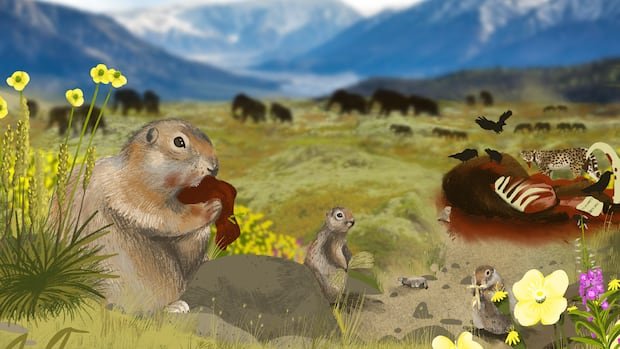
Scientists have decoded the genetic makeup of ancient animals like woolly mammoths and ground squirrels that inhabited the grasslands of the Canadian Arctic during the last ice age by studying DNA extracted from frozen squirrel excrement in the Yukon.
A recent study published in Nature Communications reveals that the fossilized feces contained DNA traces of various creatures, including wolves, mammoths, horses, birds, and insects, along with a diverse range of plants. Tyler Murchie, a researcher at the Hakai Institute and the lead author of the study, emphasized the comprehensive nature of the ecosystem captured in the DNA samples.
Ground squirrels in the Arctic, known for their burrowing habits, inadvertently preserved a wealth of information in their feces over hundreds of thousands of years. The researchers found evidence of mammoth and horse DNA in the ancient squirrel droppings, indicating their varied diet that included not only plants but also larger animals.
The study highlighted the effectiveness of analyzing DNA from coprolites (fossilized feces) in reconstructing ancient ecosystems. The researchers compared the DNA fragments to known sequences to identify different organisms, showcasing the remarkable preservation capacity of excrement compared to bones and sediments.
Analysis of the genetic material in the ancient feces indicated a stable ecosystem in the Arctic grasslands over 700,000 years, distinct from the current boreal forest ecosystem. The findings underscore the importance of understanding past climatic changes to predict the impact of current climate shifts on Arctic wildlife.
However, the rapid thawing of permafrost due to climate change poses a threat to these invaluable records of ancient ecosystems. Researchers are racing against time to preserve these unique archives before they are lost forever. The study, funded by various organizations, sheds light on the critical role of ancient DNA in unraveling the mysteries of past environments and evolutionary history.

