
In the realm of Canadian politics, the act of MPs switching party allegiance evokes a range of reactions, from praise to condemnation. However, one term that doesn’t consistently apply to these politicians is “re-electable.”
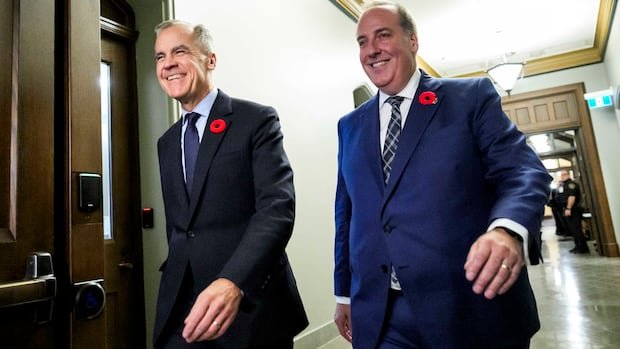
A recent development in Ottawa sent shockwaves through the political landscape as long-standing Conservative member Chris d’Entremont announced his move to join the federal Liberal caucus, with Prime Minister Mark Carney suggesting that others might follow suit.
While floor-crossing is not a new phenomenon in Canadian politics, a historical review indicates that it often comes at a cost during elections. According to Semra Sevi, an assistant professor at the University of Toronto specializing in political science, changing parties poses a significant risk to a politician’s re-election prospects.
Research conducted by Sevi, tracking party switches from Confederation to 2015, reveals a shift in electoral outcomes over time. While early floor-crossers faced minimal repercussions at the polls, the trend has shifted since the 1970s, with party switching becoming increasingly detrimental to political survival outside one’s original party.
Despite rare instances of success following a party switch, the future electoral fate of d’Entremont remains uncertain. The dynamics of party loyalty and voter perceptions play a crucial role in determining the electoral viability of politicians who change affiliations.
Notable cases of MPs changing party affiliations have varied outcomes, with some successfully retaining their seats while others face electoral defeat. The decision to switch parties is often viewed as opportunistic, potentially undermining an MP’s credibility with constituents.
In the case of d’Entremont, who identifies as a more progressive conservative, his ability to justify the switch to his electorate in Acadie-Annapolis may influence his re-election prospects. While there may be political fallout and criticism accompanying such moves, there are no legal barriers preventing MPs from changing party affiliations.
Over the years, Canadian political history has witnessed several high-profile floor-crossings, each with its unique set of circumstances and consequences. From principled stands to strategic alliances, the act of changing party allegiance remains a complex and contentious aspect of the country’s political landscape.

