
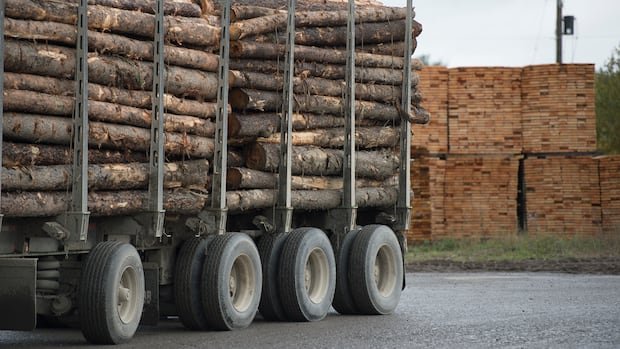
The closure of a sawmill in Ear Falls, Ontario has sent shockwaves through the community, prompting industry leaders to urge government intervention. Mayor Kevin Kahoot disclosed the news, emphasizing the need to tap into available resources and explore viable solutions. The sawmill, operated by Interfor, serves as the primary employer in the small northwestern Ontario town, with under 1,000 residents.
Factors such as U.S. tariffs and a stagnant market have led to the indefinite shutdown, potentially resulting in the loss of 150 jobs. Recent tariff increases have pushed total duties on softwood lumber to nearly 45%, according to the Ontario Forest Industries Association (OFIA).
Ian Dunn, President and CEO of OFIA, expressed concerns over the ongoing consolidation in the pulp and paper sector, impacting the sawmilling industry. Despite efforts to enhance the domestic market, the reliance on U.S. exports poses challenges, with 97% of Ontario’s forest product exports directed to the U.S., amounting to almost $8 billion.
In response to the crisis, Prime Minister Mark Carney announced a substantial support package for the sector, including a market diversification program and up to $700 million in loan guarantees through the Business Development Bank of Canada (BDC). Dunn stressed the urgency of implementing these measures promptly to aid struggling lumber producers.
Meanwhile, in northeastern Ontario, government funding has enabled the Kapuskasing paper mill to resume operations, highlighting the importance of industry diversification. Rick Dumas, Mayor of Marathon and President of the Northwestern Ontario Municipal Association (NOMA), emphasized the need for companies to explore new product avenues to remain competitive.
Dumas underscored the critical impact of industry shutdowns on local economies, urging collaboration between governments and the forestry sector to drive product diversification. The disconnect between the abundance of raw materials and housing demands in the region remains a puzzle, as Dumas questioned the simultaneous decline in sawmills and the push for increased home construction.
OFIA praised the Ontario government’s advanced wood construction plan as a positive step towards market expansion and diversification. Dumas emphasized the importance of skilled labor in the industry, highlighting the need for companies to innovate and attract young talent to sustain the forestry sector in the region.

