
Shahin Dashtgard, a sedimentologist affiliated with Simon Fraser University, displays a handful of muddied sand sourced from the Fraser Valley in Delta, B.C.
This sediment, which constitutes the ground layer beneath much of the Fraser Valley, is loose, weak, and saturated with water. It presents significant challenges for the construction of Alberta’s proposed new pipeline terminal located on the southern British Columbia shores at Roberts Bank, close to the Fraser River estuary.
As Dashtgard moves his hand, the wet sand breaks apart and flows through his fingers “almost like a soup.” He is illustrating the phenomenon of liquefaction, which could take place during an earthquake.
“This presents a major concern when constructing on top of such loose or water-saturated sediment or sand,” he remarked.
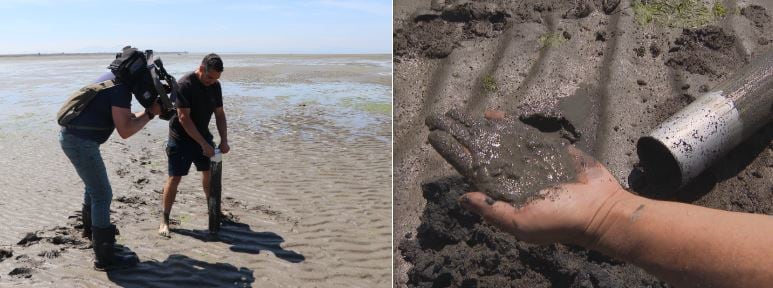
The Fraser Valley has a famously weak, loose and water soaked sand sub-surface that could become ‘almost like a soup’ during an earthquake, says Shahin Dashtgard, a sedimontologist from Simon Fraser University. (Georgie Smyth/CBC)
A Shift in the Route
Prime Minister Mark Carney and Alberta Premier Danielle Smith have expressed strong support for a new pipeline route from Alberta, currently being evaluated by the Major Projects Office (MPO), which is largely set to follow the existing Trans Mountain pipeline corridor.
The two leaders convened in Calgary for a joint press conference on July 2, where Smith promoted the plan as “the quickest, most economical route” for the pipeline shortly after B.C.’s North Coast tanker ban was upheld.
“The optimal route for a new pipeline is one that navigates through an existing corridor, south via the Trans Mountain route,” Carney informed reporters in Calgary.
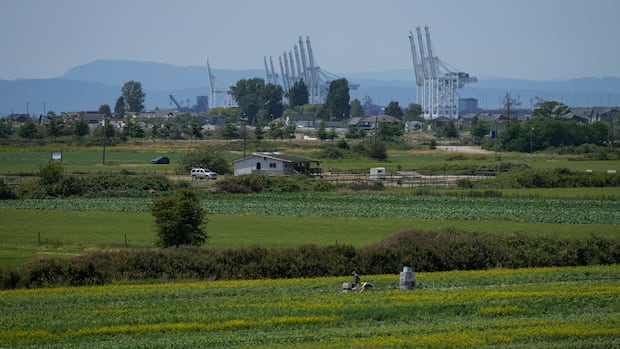
However, a significant portion of the proposed route is still undeveloped. The deviation will start at Hope, B.C., and continue through the Fraser Valley, ultimately ending at Roberts Bank instead of Burrard Inlet, where two earlier oil pipelines have terminated.
Concerns about this preferred terminus have persisted for years.
Seismic and environmental challenges, spatial limitations, and the significant influence of local First Nations will dictate the pace and direction of the project, even if it is designated as a project of national interest by the upcoming October deadline.
In their proposal, Alberta has recognized some of these longstanding issues, indicating that Roberts Bank and its surrounding land is “the area with the highest sensitivity along the corridor” and that “the community will have considerable concerns regarding oil and marine spills, tanker traffic, and cumulative impacts.”
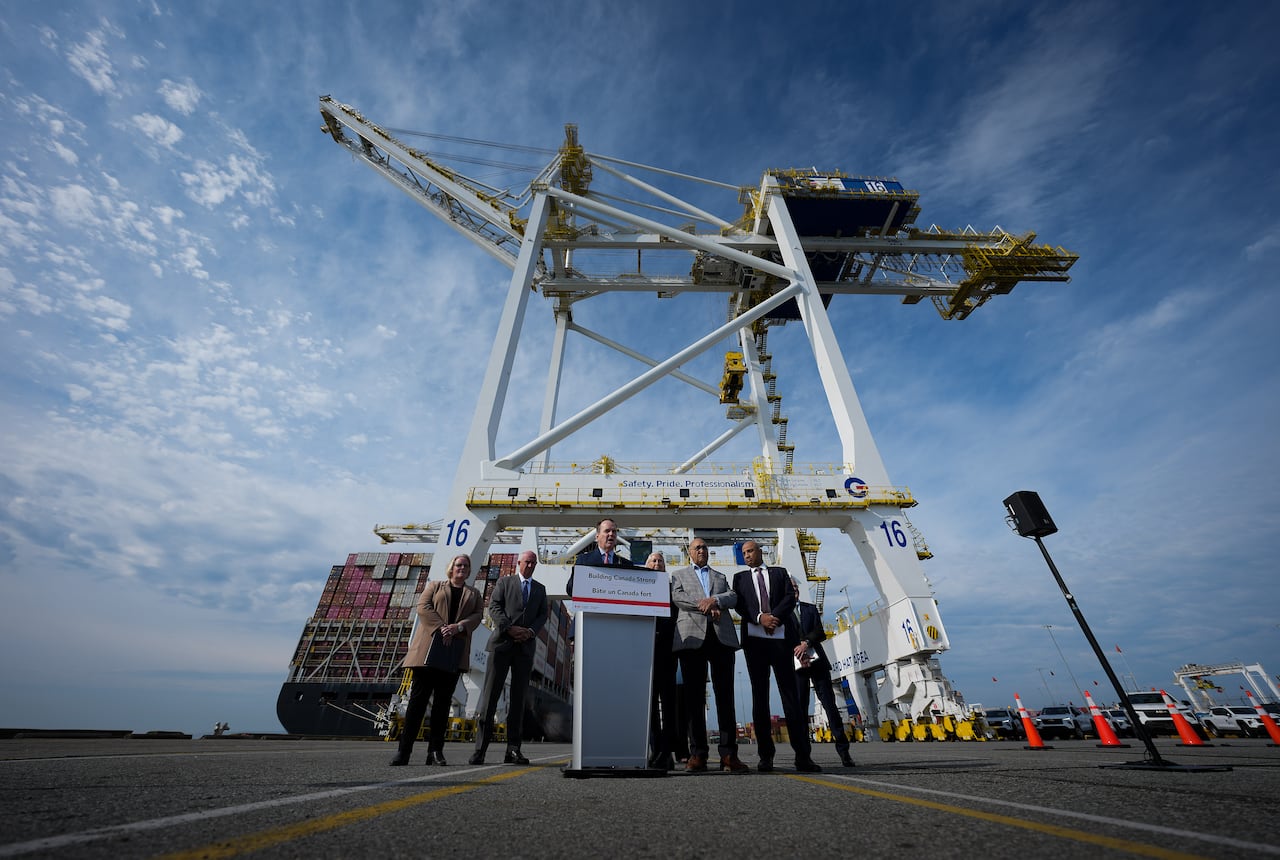
Minister of Transport Steven MacKinnon speaks at a July 16 news conference in Delta, B.C., to announce that Roberts Bank Terminal 2, a long proposed expansion of the Port of Vancouver, is being referred to the Major Projects Office. But it’s not clear how that expansion could co-exist with Alberta’s marine pipeline terminal proposed for the same area. (Darryl Dyck/The Canadian Press)
Port Expansion Initiative
Roberts Bank is currently facing scrutiny regarding its viability for yet another significant project — Roberts Bank Terminal 2 — an expansion of the Port of Vancouver that has been in the works for over a decade and aims to boost its container handling capacity by over 30 percent.
According to submission documents, the pipeline and port terminals are approximately the same size.
The port project already has most of the necessary approvals, with the exception of a federal permit under the Species at Risk Act. Advocates at the Vancouver Fraser Port Authority have called for expedited approval.
During an event in mid-July announcing the referral of the port expansion to the MPO, CBC News inquired with port CEO Peter Xotta about how the container expansion and proposed pipeline terminal could coexist.
Xotta responded by stating that the port expansion “is much further along” of the two projects, but he assured that they would collaborate with the MPO on the specifics.
Later, a spokesperson for the port emphasized to CBC News that “it’s crucial to recognize that these are two distinct projects.”
However, environmental advocates argue that such distinctions will have little effect on how species like Pacific Salmon, Western Sandpipers, and Southern Resident Killer Whales will be impacted by another terminal in the area.
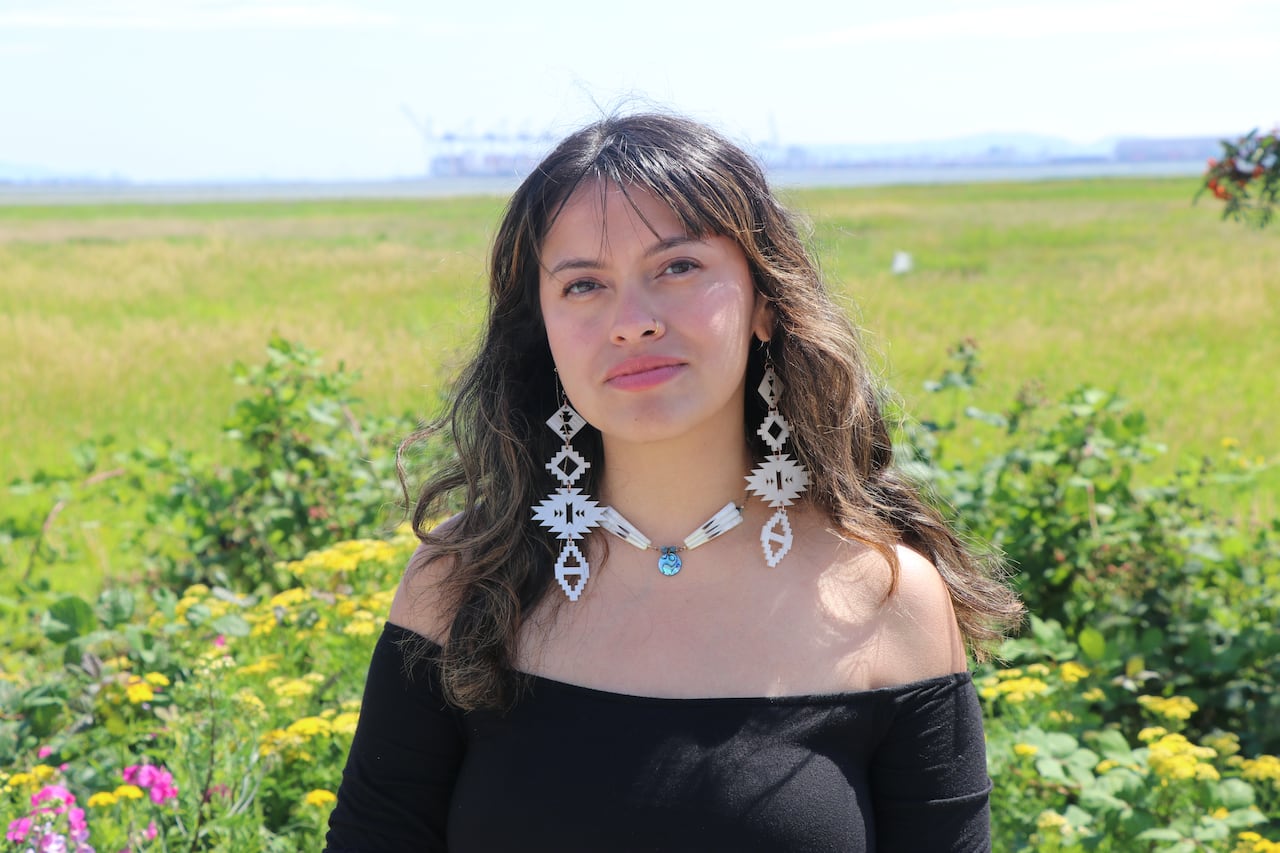
Lucero González from the Wilderness Committee asserts that Roberts Bank serves as essential habitat and is already overly industrialized due to the container and ferry terminal. “What we see here is not just a nice spot to see. This is what the Southern Resident orcas call home,” she stated. (Georgie Smyth/CBC)
“It’s alarming,” remarked Lucero González, a campaigner with the Wilderness Committee, which has challenged the container terminal expansion in federal court.
“Should a pipeline be constructed alongside the port expansion, it would represent an unprecedented level of project development and tanker traffic in British Columbia,” González warned.
Alberta’s submission to the MPO outlines its strategies to alleviate the impacts of its pipeline infrastructure on federally protected aquatic species.
If the pipeline initiative receives classification under the Building Canada Act, federal approvals will be automatically granted. Nonetheless, an MPO representative indicated to CBC News that the pipeline may still require certain permits and authorizations.
The MPO representative pointed out that having the project recognized under the Building Canada Act means the MPO would focus on “how” to proceed with the project rather than “whether” it should move forward.
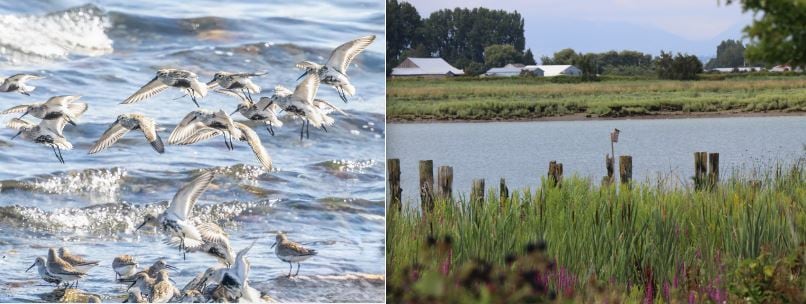
The Roberts Bank Wildlife Management Area is adjacent to Canada’s largest container terminal. It is recognized nationally as critical wintering grounds for the highest concentration of shorebirds and waterfowl found anywhere in Canada. (Submitted by Kate Paton, Georgie Smyth/CBC)
Seismic Considerations
Moreover, there are underlying geological concerns: the Fraser Valley’s floor, which may turn soft and unstable during seismic activity.
Trans Mountain, the Crown corporation owning 90 percent equity in the project, informed Canada’s National Energy Board (NEB) in 2015 that geological factors involved in constructing a marine terminal at Roberts Bank would lead to a considerably larger footprint and higher capital expenditures compared to a terminal at Burrard Inlet.
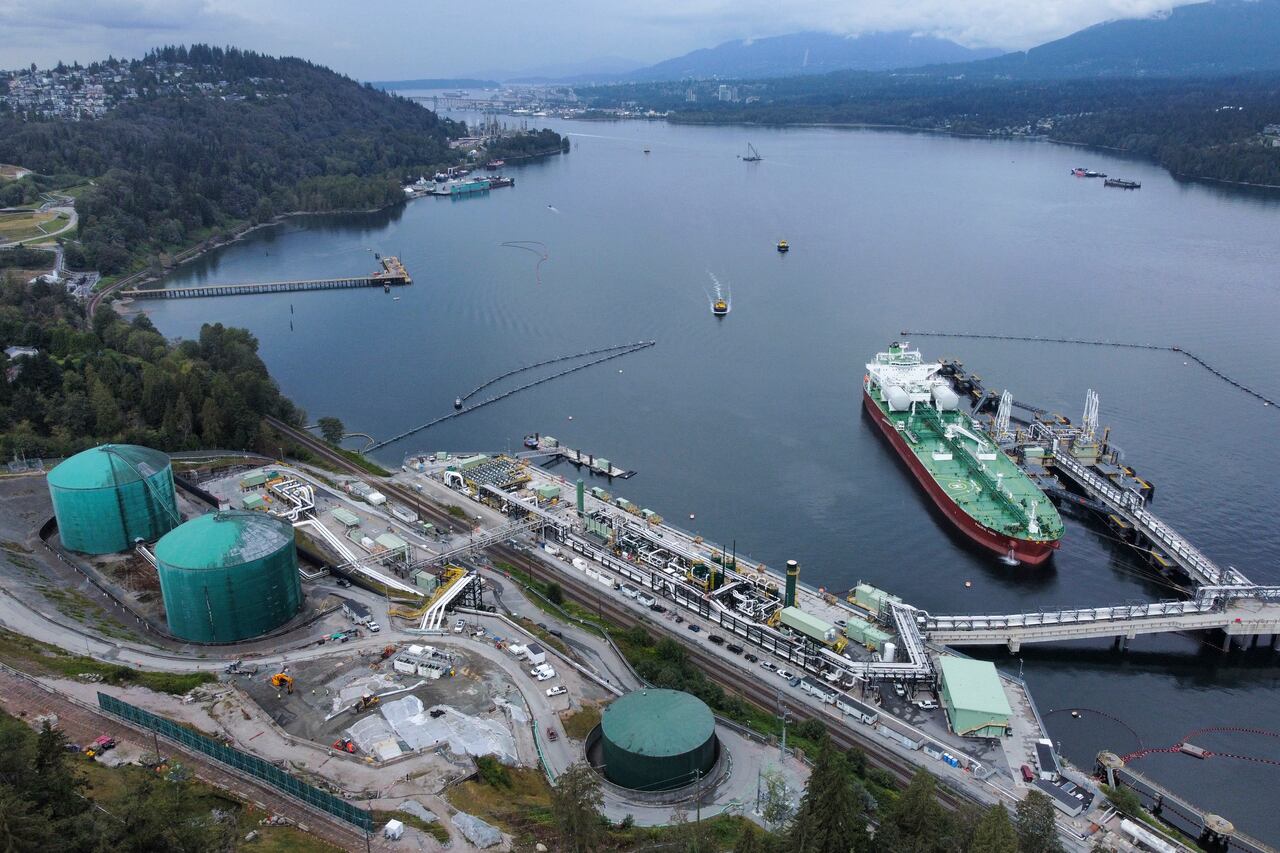
When the Trans Mountain pipeline was successfully duplicated in 2024 it terminated at Westridge Marine Terminal in Burrard Inlet, in Metro Vancouver. (Ben Nelms/CBC)
In public documents submitted to the NEB, Trans Mountain indicated that “the potential for seismically-induced soil liquefaction is a significant concern.” They also acknowledged that ground improvement measures may be required beneath the pipeline and terminal site prior to construction.
CBC News reached out to Trans Mountain to inquire about what had changed since then for Roberts Bank to become the favored site for its pipeline terminal.
The company redirected CBC to the Alberta government, which stated that Roberts Bank was selected due to its established marine shipping corridor and existing marine safety measures.
It further mentioned that specific engineering challenges related to that location would be evaluated as the project develops.
Alberta’s proposal suggests two potential pipeline routes from Hope, B.C., to Roberts Bank. The ultimate route, they indicate, will be determined based on community feedback.
Different engineering strategies will be needed depending on the selected route, as explained by Ribu Dhakal, an assistant professor of Civil Engineering at the University of British Columbia.
The well-known risk of liquefaction will pose the most considerable challenge, he noted. “They will face significant difficulties, but it is achievable.”
Ground compaction, various trenching techniques, and other engineering solutions can reduce these risks, but Dhakal warns that they could complicate the project and increase costs.
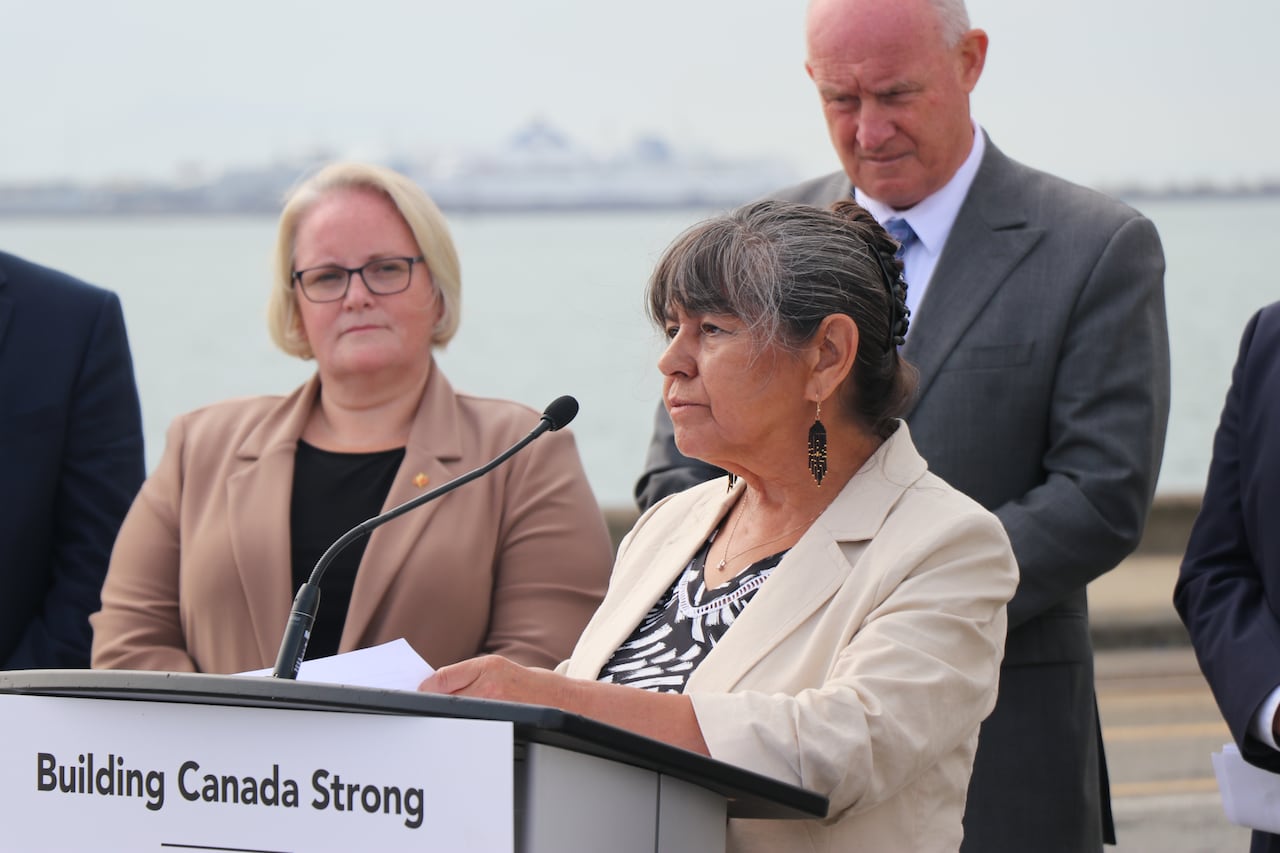
Tsawwassen First Nation Chief Laura Cassidy is among numerous First Nation leaders who will need to be consulted regarding the proposed pipeline terminal at Roberts Bank. In a statement, the Nation indicated it has not yet taken a stance on the proposed route. (Georgie Smyth/CBC)
Concerns from First Nations
Central to this discussion are the rights and titles of several First Nations, whose traditional territories include the land designated for the pipeline terminal. Many have not yet formed an opinion on Alberta’s proposal and are awaiting additional information.
One such group, Tsawwassen First Nation, has land near the proposed marine terminal for the pipeline project.
While they granted consent for the proposed expansion of the port, they clarified in a media release that “consent does not equal support for the project.”
Chief Laura Cassidy of the Tsawwassen First Nation declined to participate in an interview but hinted at her government’s position on further development in the Fraser River delta during the July 16 press conference announcing the port expansion’s MPO referral.
“While the benefits may be national, the environmental, cultural, and harvesting impacts will be felt most directly by the Tsawwassen people,” she stated.
“To suggest that we are unconcerned about the developments here would be an understatement.”

