
The Gaza Humanitarian Foundation, supported by the U.S. and Israel to provide aid to Gaza independently of the United Nations, has announced the closure of its operations. Following a U.S.-brokered ceasefire six weeks ago, the foundation had already ceased distribution and confirmed its permanent shutdown on Monday, stating it had achieved its objectives. GHF Director John Acree emphasized the success in demonstrating a more effective aid delivery approach for Gazans.
Throughout its brief existence, GHF’s activities were veiled in secrecy. Despite being established with U.S. and Israeli support as an alternative aid provider, the organization never disclosed its funding sources or much information about the armed contractors managing the sites. Their primary aim was to ensure aid reached Gaza without being diverted by Hamas.
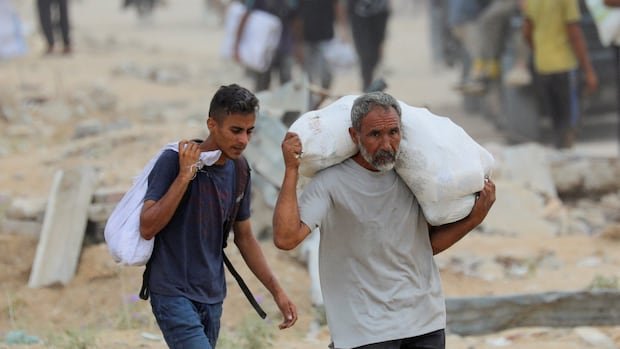
Reports from Palestinians, aid workers, and health officials revealed that individuals seeking aid had to risk their lives navigating Israeli troops guarding the distribution points. Allegations emerged of soldiers firing on aid-seekers, resulting in casualties as documented in social media videos. The Israeli military defended its actions, stating that firing incidents were either warning shots for crowd control or in response to perceived threats to its personnel.
GHF maintained that there were no violent incidents at the aid sites but acknowledged the hazards faced by people traveling on foot to reach them. However, testimonies from contractors at the sites, supported by video evidence, indicated that American security guards deployed live ammunition and stun grenades amid chaotic scenes of hungry Palestinians scrambling for food.
Acree mentioned GHF’s transition of responsibilities to the U.S.-led Civil-Military Coordination Center overseeing the Gaza ceasefire. He highlighted ongoing discussions with CMCC and international entities to adopt and expand GHF’s operational model.
On a different note, the armed wing of the Palestinian Islamic Jihad group announced the location of a hostage’s body in an area controlled by the Israeli army in Gaza. The body is one of three yet to be handed over.
The ceasefire between Hamas and Israel, signed on October 9, marked a temporary halt to a two-year conflict, with unresolved issues set for future negotiations. The agreement facilitated the release of surviving hostages by Hamas in exchange for Palestinian prisoners held by Israel. It also involved the repatriation of hostages’ remains and militants’ bodies between the parties.
Since the commencement of hostilities with a Hamas-led attack in 2023, casualties have been substantial, with a significant toll on both Israeli and Palestinian populations. The conflict’s human cost, as reported by Gaza’s Health Ministry, illustrates a devastating impact, particularly affecting women and children.
The United Nations had expressed concerns about GHF’s operations, citing potential risks of militarized aid distribution imposed by the foundation. Despite GHF’s claims of successful aid delivery, the organization faced criticism over its approach and lack of transparency surrounding its activities.

