
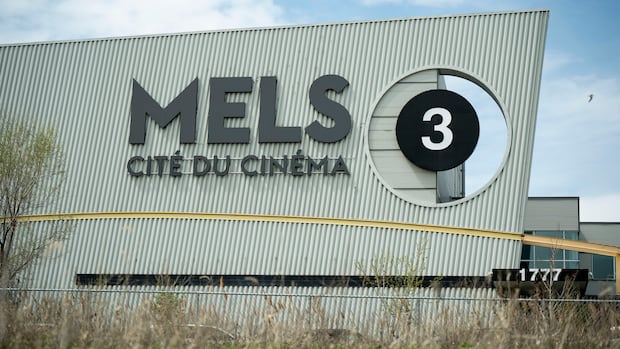
One of Canada’s leading post-production firms is set to shut down a Quebec facility that contains one of the few laboratories in North America capable of processing film for professional use.
Patrick Jutras, the president of MELS studio in Montreal, confirmed this development in a statement to CBC. He pointed to the absence of “adequately competitive tax incentives” to attract international productions to the city, along with diminishing investment in local audiovisual projects, as reasons for the closure of the company’s photochemical lab in the coming months.
Although MELS will remain operational, Jutras indicated that the studio is shifting and consolidating certain post-production functions to adapt to market needs and ensure profitability. Consequently, both the photochemical lab and a projection room will be closed, while the remaining post-production operations will be relocated.
“MELS understands the strong connection that many artists have to these facilities, especially the analog film lab, which is the only one of its kind in Canada,” Jutras stated in his message to CBC, originally delivered in French.
“The urgent need to support the struggling local audiovisual industry requires a swift governmental reaction to prevent the erosion of Quebec’s expertise in this field.”
Digital vs. film
As the film sector increasingly embraces digital production methods, the MELS photochemical lab has emerged as one of the few remaining options for filmmakers wanting to work with and develop 16 millimetre and 35 millimetre film for broader distribution.
Concordia film professor Michael Yaroshevsky noted that MELS’ facility is one of just three “full service” development labs on the continent—capable of processing 6,100 metres of film daily—alongside two others located in Los Angeles and Atlanta.
This capability has enabled the lab to assist in the production of various films, including the Nicolas Cage-starring Dream Scenario, Matthew Rankin’s Universal Language, Xavier Dolan’s Mommy, and numerous Quebec-produced films that have gained international recognition.

The closure of the MELS photochemical laboratory in Montreal has disappointed many filmmakers who relied on its services. Filmmaker Michael Yaroshevsky has initiated a petition urging for the lab’s continuation.
In light of the announcement regarding the lab’s closure, Yaroshevsky has started a petition advocating for the preservation of the photochemical studio. As of Friday afternoon, the petition has gathered 2,577 signatures, with Yaroshevsky emphasizing that maintaining the photochemical lab is essential for many local filmmakers.
“There is no denying that digital technology is dominant in the industry, and digital cinema is a legitimate and significant medium. However, film continues to thrive in Montreal and beyond,” he remarked in a statement.
“Aspiring filmmakers want to learn and create using celluloid. It is crucial that this medium remains accessible for cinema creation. We are not opposed to progress; we just resist a future that is diminished.”

At the Toronto International Film Festival, Canadian films showcasing local settings are taking the spotlight, with several filmmakers securing distribution agreements.
MELS operates as a subsidiary of Quebecor, a telecommunications firm that also manages the TVA Group, Freedom Mobile, and Vidéotron. Quebecor has not yet responded to a request for comments.
Historically a stronghold of the Canadian film scene, French-language Canadian films have recently experienced a sharp decline at the box office.
As reported by Telefilm Canada, the revenue from French-language Canadian films dropped to $11.3 million in 2025, representing a 45.5 percent decrease from 2024.
In general, the performance of domestic films saw a significant decline of 39.8 percent following two years of strong recovery. Telefilm Canada recently informed the Canadian Press that this downturn is attributed to fluctuating theatrical markets and an unusually strong showing in 2024, rather than a decline in quality.
Earlier this week, Quebec Premier Christine Fréchette announced a $609.6 million investment over five years aimed at implementing the 2026–2031 Quebec Audiovisual Strategy, designed to ensure the sustainability and vibrancy of the industry.
This strategy is a response to the emergence of artificial intelligence and digital platforms, which are reshaping consumer habits as well as production and distribution models.

