
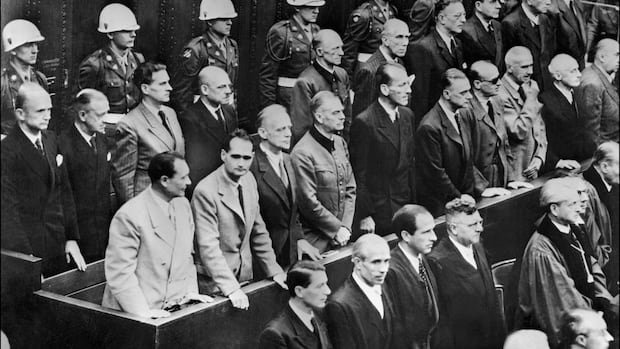
Eighty years after the commencement of the Nuremberg Trials to prosecute Nazi Germany’s leaders for war crimes, the trial documents are now accessible online and free of charge. The Harvard Law School Library researchers spent over two decades digitizing more than 150,000 Nuremberg Trials documents, making them searchable in an online database with analyses, summaries, and photographs.
Paul Deschner, the project’s technical lead, emphasized the significance of this effort, stating that access to these documents is essential for understanding the dynamics that lead to such events. Launched on the 80th anniversary of the trials’ inception on November 20, 1945, the Nuremberg Trials Project website provides a comprehensive resource for historical research.
The Nuremberg Trials aimed to hold Nazi leaders accountable for the atrocities committed during World War II, including the Holocaust, where six million Jews were murdered. Initially, 24 defendants were indicted in the first trial, with 19 convicted, 12 sentenced to death, and one committing suicide before execution. Subsequently, nearly 200 more Nazis were convicted in the following 12 Nuremberg trials organized by the United States.
Despite the trials being considered highly significant in modern history for establishing a framework to address mass atrocities on a global scale, Deschner expressed concerns about the fading collective memory of these events. He highlighted the risk of younger generations losing awareness of crucial historical concepts like Auschwitz and the Final Solution.
Harvard’s collection of Nuremberg Trial documents, the world’s second-largest outside the U.S. National Archives, includes full trial transcripts in English for all 13 trials, along with briefs and evidence exhibits. The digitization process began in 1998 to ensure the preservation and accessibility of these historical records.
Deschner emphasized the meticulous organization and searchability of the documents to provide detailed summaries and context for researchers. Despite the collaborative efforts involved in the project, Deschner acknowledged the challenges faced by the team in reviewing the extensive documentation.
The project’s goal aligns with the trials’ original purpose of creating an archive to educate and inform present and future generations about the horrors of history. Deschner hopes that people will explore this rich archive to gain insights and recognize historical patterns that could potentially reoccur in the future.

