
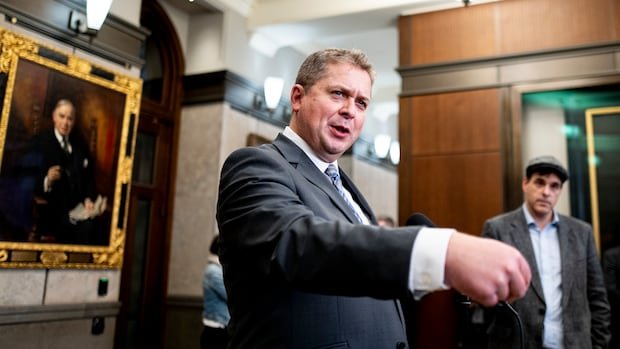
Conservative House leader Andrew Scheer expressed concerns on Wednesday that the government might be pushing for a snap election by unveiling a budget that the opposition is unlikely to back. Finance Minister François-Philippe Champagne is set to present the government’s inaugural budget next week, which is anticipated to feature significant investments in defense, housing, and support for those affected by the U.S. trade tensions, alongside substantial spending cuts.
Currently, no party has committed to supporting the budget, and with the Liberal government holding a minority of seats, they need backing from at least one of the Bloc Québécois, Conservatives, or NDP to pass the budget in the House of Commons. Failure to garner enough support could lead to a government collapse and trigger a potentially premature election.
Opposition Leader Pierre Poilievre has put forth several demands to the Liberal government in exchange for his party’s support for the budget, including scrapping the industrial carbon tax, reducing income and capital gains taxes, and capping the deficit at $42 billion. However, these demands are viewed as improbable to be met by the government.
The potential stalemate over the budget has raised concerns among government officials, with Government House leader Steven MacKinnon expressing worries about securing enough votes. MacKinnon emphasized the importance of cross-party cooperation in passing an affordable budget that aligns with the needs of Canadians.
Meanwhile, the Bloc Québécois has also presented demands, seeking increased Old Age Security benefits, enhanced health transfers, interest-free loans for first-time homebuyers, and additional infrastructure investments primarily directed at Quebec.
The NDP, although crucial in potentially tipping the scales, has not placed explicit demands but has highlighted the necessity for targeted investments to support working families, create jobs, ensure affordable housing, and bolster public healthcare.
Interim NDP Leader Don Davies emphasized the importance of investments over austerity measures in the budget, stating that his party will evaluate the budget contents before making a final decision on support. Unlike other parties that have signaled reluctance in backing the budget, Davies emphasized the need to scrutinize the budget details before committing to a stance.

