
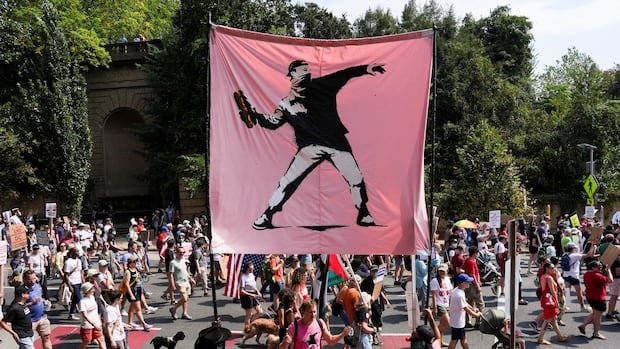
Washington, D.C., resident Sean Charles Dunn threw a sandwich at a federal agent as a form of protest, which led to a trial on a misdemeanour assault charge. Assistant U.S. attorney John Parron emphasized to jurors the seriousness of such actions, stating that regardless of the reason, it is unacceptable to throw objects at people out of anger.
During the trial, Dunn admitted to the act but argued that it was a harmless way to express his opposition to President Donald Trump’s law-enforcement measures in the capital. His defense attorney, Julia Gatto, portrayed the sandwich throwing as a symbolic gesture following Dunn’s exercise of free speech rights.
The incident, captured on a bystander’s cellphone video and shared widely on social media, quickly gained attention, with Dunn becoming a figure of resistance against the federal government’s increased presence. Despite the grand jury’s decision not to indict Dunn on a felony assault charge, he now faces a misdemeanour charge.
Customs and Border Protection agent Gregory Lairmore testified that the sandwich hit him forcefully enough to feel it through his ballistic vest, describing the impact vividly with details of onions and mustard scent. Lairmore also recounted Dunn’s verbal confrontations with the agents, including insults and profanities.
After throwing the sandwich, Dunn fled but was apprehended shortly afterward. Lairmore’s colleagues later joked about the incident, presenting him with playful gifts referencing the event. Defense attorney Sabrina Schroff argued that the agents’ reactions demonstrated that the case was exaggerated and worthy of humor.
The trial continues with uncertainty about Dunn’s testimony. Prosecutors stressed that while differing opinions on federal policies are valid, physical assault cannot be justified. Dunn, formerly a Justice Department employee, faced consequences following his arrest, including dismissal and a subsequent raid on his home by armed federal agents.
The case reflects broader political tensions, including Trump’s deployment of National Guard troops in various cities and his emphasis on law and order. Despite claims of reduced crime rates during the federal surge, the presence of troops has sparked unease among residents. Trump’s efforts to expand military presence in multiple cities have raised concerns about aggressive law enforcement tactics and potential civil rights violations.

