
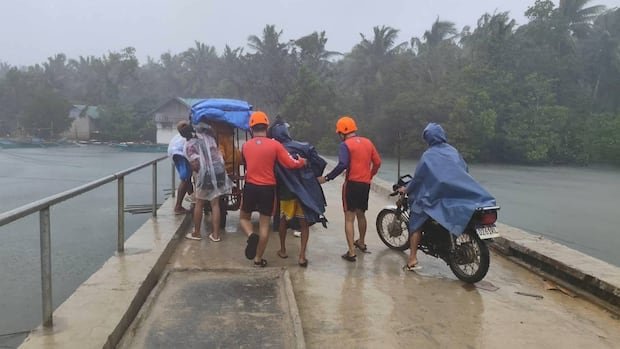
A powerful typhoon named Fung-wong made landfall on the northeastern coast of the Philippines, resulting in two confirmed fatalities and necessitating the evacuation of over a million residents from flood and landslide-prone areas. With sustained winds reaching up to 185 km/h and gusts up to 230 km/h, the storm hit Dinalungan town in Aurora province on Sunday night after unleashing heavy rain and strong winds across several northeastern provinces throughout the day.
Spanning a vast area of the Philippines, Fung-wong emerged from the Pacific while the nation was still addressing the aftermath of Typhoon Kalmaegi, which caused significant devastation in central island provinces, leading to 224 fatalities before moving on to Vietnam. In response to the successive calamities, Philippine President Ferdinand Marcos Jr. declared a state of emergency.
Forecasters detected Fung-wong near Pandan town in eastern Catanduanes province, where heavy rains and fog affected visibility. Categorized as a super typhoon due to sustained winds exceeding 185 km/h, Fung-wong prompted the evacuation of over 916,860 individuals from high-risk areas in northeastern regions, including Bicol, known for its susceptibility to cyclones and volcanic mudflows from Mayon Volcano.
Defense Secretary Gilberto Teodoro Jr. emphasized the potentially catastrophic impact of the approaching storm and urged prompt compliance with evacuation orders to mitigate risks. While international aid has not been requested following the disasters, the United States and Japan stand ready to offer assistance.
Local Red Cross branches set up over 500 evacuation centers, accommodating nearly 21,000 families, as the organization anticipates a rise in casualties as Fung-wong intensifies. With power outages reported in several eastern communities and warnings of life-threatening storm surges along coastal areas, authorities proactively closed schools and government offices in northern provinces expected to be affected by the typhoon.
As the Philippines faces a continuous onslaught of natural disasters, including typhoons, earthquakes, and volcanic activities, the nation remains highly vulnerable to such calamities, underscoring the importance of comprehensive disaster preparedness measures.

