
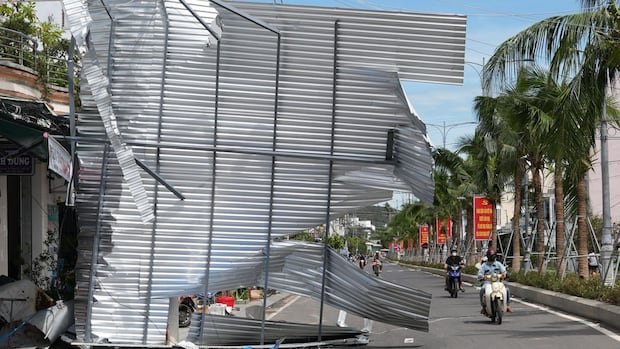
At least five individuals lost their lives in Vietnam following the onslaught of Typhoon Kalmaegi, which brought destructive winds and heavy rainfall to coastal areas. The storm hit central Vietnam late on Thursday, causing widespread damage, uprooting trees, damaging homes, and leading to power outages before weakening as it moved further inland.
Authorities issued warnings about ongoing heavy rainfall, with central provinces expected to receive up to 200 millimeters of rain. Rising river levels from Hue to Dak Lak raised concerns about potential flooding and landslides. In Gia Lai province, shrimp farm owner Nguyen Dinh Sa reported devastating losses, with approximately six metric tons of shrimp destroyed, leaving him in despair over his lost investments.
The typhoon’s impact along the coast was evident, with toppled trees, shattered glass, and roofing sheets scattered around. Residents relied on generators to recharge their phones as they dealt with the aftermath. Vietnam’s disaster management agency reported seven injuries and around 2,800 damaged homes, leaving 1.3 million people without electricity.
The state-run Vietnam News Agency highlighted damage to the railway in Quang Ngai, while the government mobilized over 268,000 soldiers for search-and-rescue missions. Concerns were raised about potential flooding affecting agriculture in the Central Highlands, a key coffee-growing region of Vietnam.
Meanwhile, in the Philippines, President Ferdinand Marcos Jr. visited evacuation centers in Cebu to provide relief aid and assure victims of continued government support following Kalmaegi’s impact. The typhoon, the 13th to form in the South China Sea this year, left 135 people missing and injured 96 others in the Philippines.
Both Vietnam and the Philippines are prone to tropical storms and typhoons due to their Pacific typhoon belt locations, experiencing significant damage and casualties during peak storm seasons. In preparation for another approaching typhoon, Fung-wong, the Philippines’ civil aviation regulator heightened alert levels for area centers and airports, with the super typhoon predicted to make landfall in northern Aurora province, potentially affecting the densely populated capital region of Manila.

