
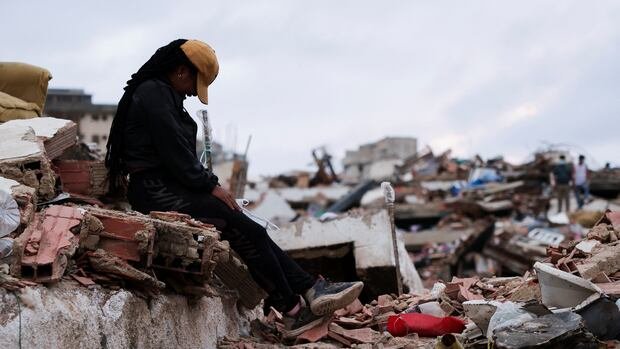
Venezuela’s dual earthquakes have resulted in a death toll of 3,535 people, with approximately 18,000 individuals displaced in the capital and nearby coastal regions. According to top lawmaker Jorge Rodriguez, the official count reveals 16,740 injuries and nearly 17,854 people without housing following the powerful quakes on June 24, registering magnitudes of 7.2 and 7.5.
The impact of the disaster in Caracas and La Guaira, particularly the coastal area, is highlighted by the latest statistics, raising concerns about the government’s response. Over 12,800 individuals are currently accommodated in 80 shelters distributed across Caracas and La Guaira.
Dr. Mauricio Cerpa Calderon, an advisor at the Emergency Operations Center of the Pan American Health Organization in Washington, emphasized the health risks emerging in these temporary sites due to factors such as overcrowding, ventilation issues, water and sanitation challenges, and improper food and waste management.
Acting president Delcy Rodriguez has defended the government’s actions in managing the crisis, although criticism from both the local population and global humanitarian organizations like the International Rescue Committee continues to escalate. Rodriguez announced the immediate deployment of security forces post-earthquake and the establishment of a new military unit to enhance future emergency responses.
In the aftermath, La Guaira witnessed the burial of earthquake victims, with coffins being transported and trenches dug in marked areas. The government’s Ministry of Communication and Information has yet to respond to requests for comments. Efforts to handle the casualties have received support from PAHO and WHO, including technical guidance, body bags, and refrigerated containers for body management.
The United Nations is actively collaborating with the Caracas government to bolster aid operations, with ongoing search and rescue operations and the arrival of specialized teams for engineering and medical support in affected regions. National health authorities are considering targeted vaccination campaigns in temporary shelters based on risk assessments and vaccine availability.

