
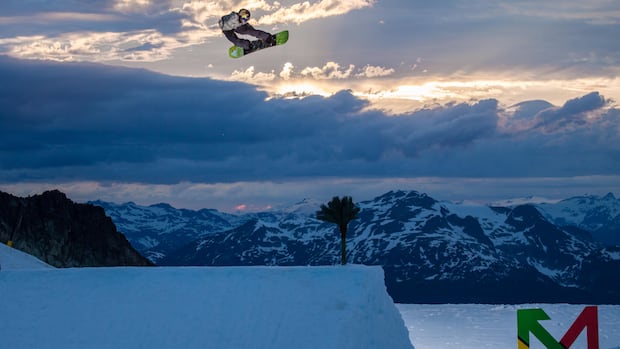
This article marks the first installment of a two-part series exploring the impact of climate change on the future of winter sports. Look out for the second part on Thursday, which will highlight athletes’ calls to action and the responses from policymakers in Canada and beyond.
For over twenty years, young skiers and snowboarders have flocked to Whistler Blackcomb’s Horstman Glacier each summer, honing their skills alongside some of Canada’s elite athletes.
Momentum Camps have been a breeding ground for Olympic aspirations and a passion for the sport. Young mogul skiers, for instance, had the opportunity to learn techniques from Mikaël Kingsbury, often referred to as the King of Moguls.
The roster of former campers who have ascended to the pinnacle of their sport is impressive: from Alex Bilodeau, a two-time Olympic gold medalist in moguls, to Cassie Sharpe, who holds both Olympic gold and silver in ski halfpipe, and Jennifer Heil, an Olympic gold medalist who will serve as Canada’s chef de mission at the upcoming Winter Olympics in Italy, among others.
In addition to fostering champions, the aim was to introduce kids to role models who exemplify healthy living, according to John Smart, a two-time Olympian and 13-time World Cup medalist in freestyle skiing, who founded Momentum Camps after his return from the 1992 Olympic Games.
“Thousands of kids have passed through the program and many have gone on to become superstars and achieve great success,” Smart remarked.
However, with the glacier rapidly melting, summer skiing and snowboarding on Horstman Glacier came to an end in the summer of 2024, when the mountain resort determined it was no longer safe to operate during warmer months. The camps that once paired enthusiastic youths with elite athletes are now a thing of the past.
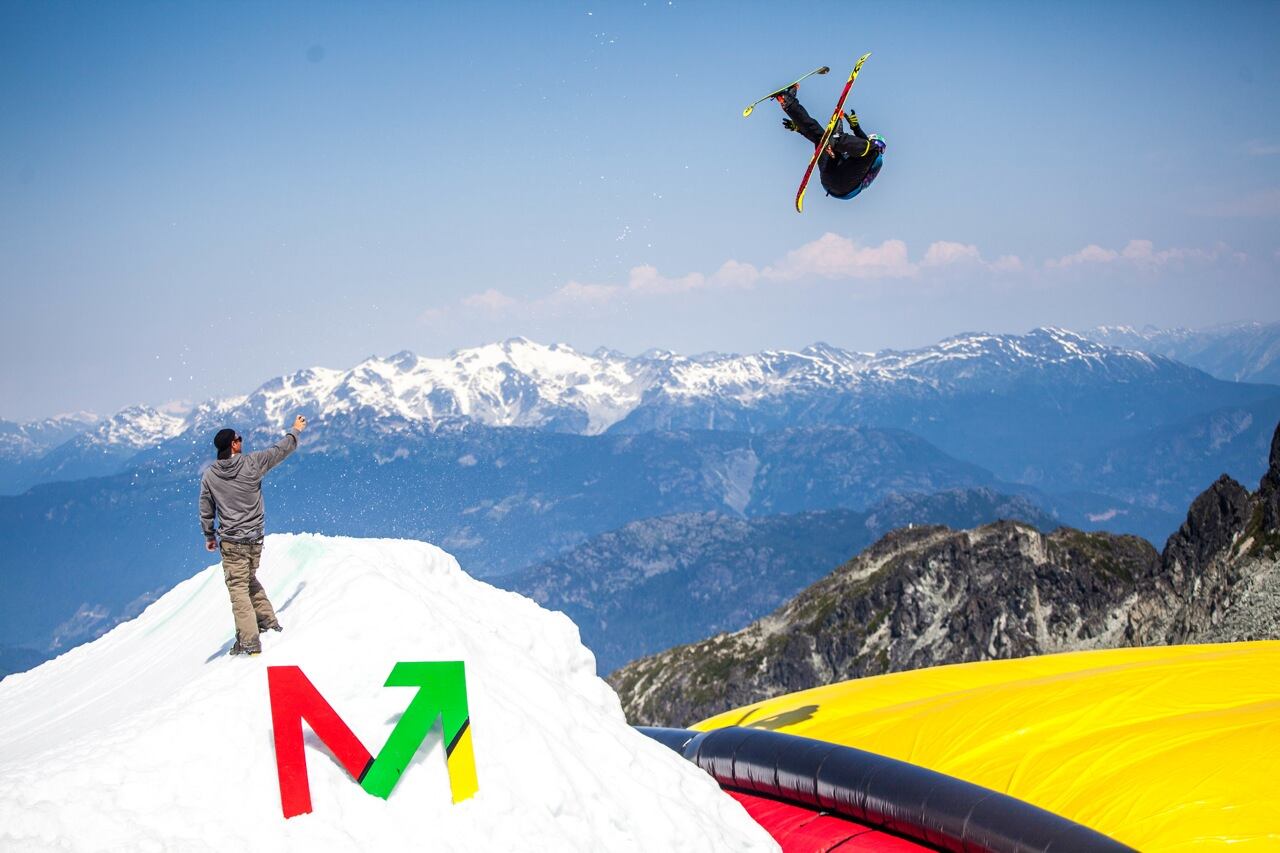
The melting glacier raised safety concerns that led to the cessation of summer skiing on Horstman Glacier. (Submitted by Momentum Camps)
This shift has left many top athletes searching for training options in Canada during the summer months, often forcing them to travel to Europe, a change that has increased costs and disrupted their routines.
The end of summer skiing serves as a stark illustration of the existential threat facing winter sports: the planet is heating up at an alarming rate.
“It’s difficult not to think about it every day, especially considering the impact on a major training center,” stated Peter Judge, CEO of Freestyle Ski Canada.
A 2024 report commissioned by the International Olympic Committee revealed that the number of locations suitable for hosting the Winter Olympic and Paralympic Games is rapidly declining. The study indicated that by the 2050s, only half of the 21 previous Olympic host cities would be viable due to global warming.
This is a reality that the ski and snowboard community is experiencing firsthand, as many competitions face cancellation or downsizing for the safety of athletes.
“We’re increasingly seeing that the reliability of early season events is quite precarious,” Judge noted. “In the past, there was never any doubt about December events taking place, but now it raises questions every year as to whether they will occur.”
The broader issue of global warming is one that the ski and snowboard sectors cannot tackle alone.
It’s a matter being discussed among global leaders and negotiators at the ongoing UN Climate Conference, COP30, in Brazil.
On Whistler Mountain, Smart believes he has devised a way to revive summer skiing, although it remains more than two years away. The solution will also require significant funding, but he is convinced it is necessary.
“The grassroots aspect is what we stand to lose the most if this disappears and isn’t restored,” Smart emphasized.
Safety led to the end of summer skiing
Operations for summer camps on the glacier were halted following a “comprehensive evaluation of conditions on Horstman Glacier and the Showcase T-bar area,” which revealed they could no longer be conducted safely.
“This decision stemmed from the state of the glacier and the effects of glacial melt,” said Dane Gergovich, a spokesperson for Vail Resorts—the American company that acquired Whistler Blackcomb in 2016. The company declined to participate in an interview.
“The snowpack on Horstman Glacier, which has been affected by glacial melt and insufficient snowfall year over year, is the key factor—this limits the terrain, causes rockfalls, hampers safe access for patrol, and has eliminated our ability to operate lift access to the area during the summer months.”
- This Saturday, Just Asking wants to know: What questions do you have about Canada’s role in global climate change action? Fill out this form and send us your questions.
Gergovich mentioned that the company recognizes the environment is integral to its business, and with that comes “a special duty to safeguard it,” referencing a commitment to achieve a zero net operating footprint by 2030.
Behind the scenes, Smart has been in talks with the mountain management about the possibility of relocating snowmaking efforts higher on the glacier.
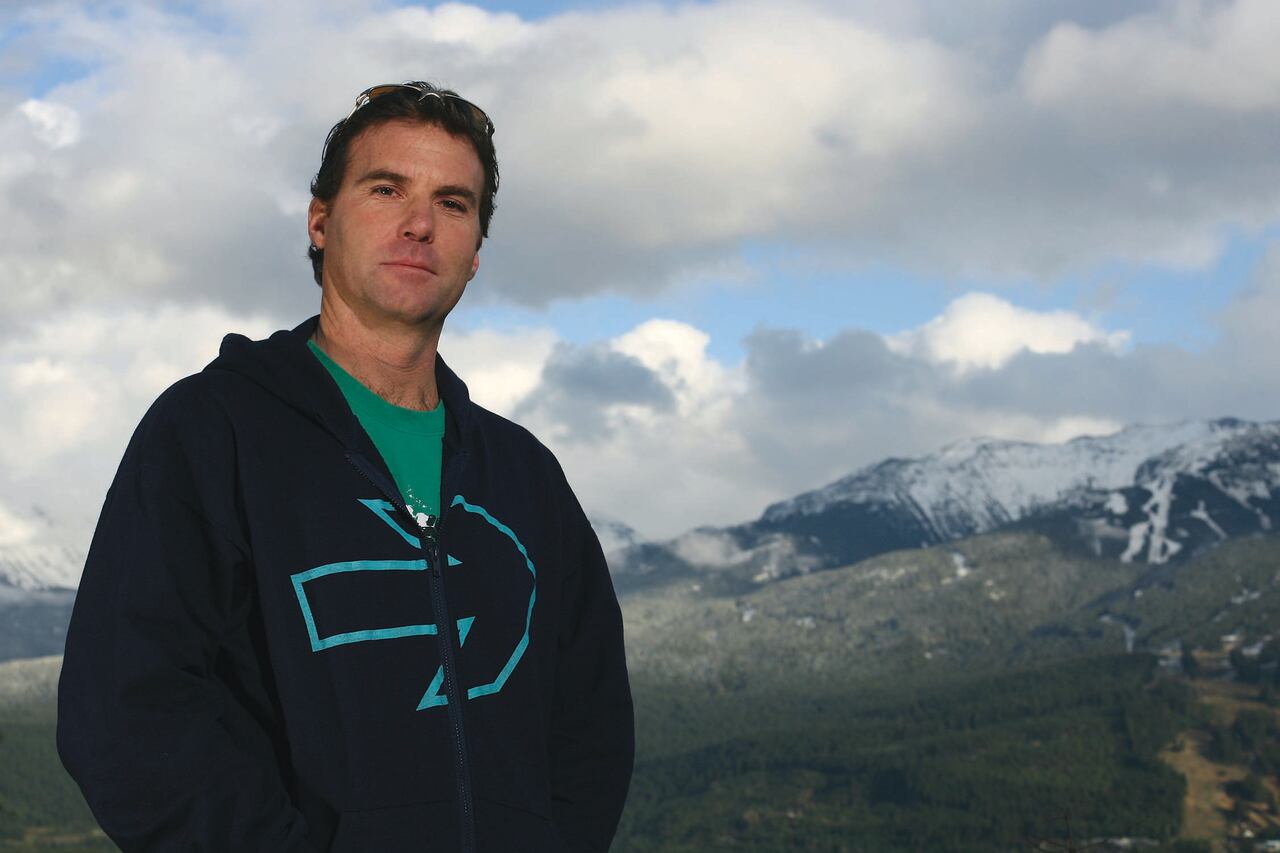
Olympian John Smart has a vision for reviving summer skiing on Whistler Mountain, but it is at least two years away and will require substantial investment. (Submitted by Momentum Camps)
Additionally, there’s the concept of snow farming, which involves piling snow and covering it strategically to keep it intact over the summer, though Smart remains optimistic that they could generate enough snow without needing to blanket the entire glacier.
“They engage in snowmaking all over the mountain,” he explained. “However, they’ve never needed to do it at such high elevations in the alpine. But as climate change progresses, the concept of elevating snowmaking operations will naturally arise. It will benefit the mountain and has ecological advantages as well, maintaining snow on the glacier longer for a trickle-down effect in the water ecosystem.”
‘Astronomical’ expenses for relocating training
This is an idea that Johan Eliasch would support. The CEO of the International Ski and Snowboard Federation (FIS) made climate change a central theme in his campaign for the presidency of the International Olympic Committee earlier this year. He lost to Kirsty Coventry, who assumed the role in sports in June.
“Summer skiing actually contributes positively to glacier preservation because compacting the snow helps it last longer,” Eliasch noted in an interview with CBC Sports.

With a changing climate, instability and economic considerations, what does the future of ski and snowboard sport look like? Our Karissa Donkin looks for answers from the International Ski and Snowboard Federation (FIS) president Johan Eliasch.
Freestyle Ski Canada also backs this perspective.
Judge was unable to specify the total cost incurred from losing access to summer skiing on Horstman Glacier. However, it is clear that it has been significant.
“In Canada, we maintain our own facilities, such as the water ramp, so the expense for our athletes is relatively low. In contrast, when we utilize facilities owned by third parties in other countries, we face steep fees, and just that aspect alone is exorbitant,” he explained.
The pressing question remains: who will finance a solution to restore summer skiing at Whistler Mountain?
Vail Resorts did not comment on the possibility of moving snowmaking operations higher on the glacier and whether that could facilitate the return of summer skiing.
Smart indicated that cost assessments for a potential project are still ongoing, and the mountain will likely seek partners to share the financial burden.
“It would serve as a sustainable, long-term training facility that wouldn’t depend on weather conditions,” he stated. “That’s the aim. It’s an ambitious goal, and I truly hope that Whistler Blackcomb and Vail recognize its potential and take a leadership role, stating, ‘Yes, this could be transformative for the entire ski industry,’ which is their business.”
An additional concern is that generating snow necessitates water and energy.
Preserving existing resources and attempting to rectify what has already been lost could come with a carbon cost.
“It’s a delicate balance we must maintain, recognizing that ultimately, we can’t achieve everything at zero impact,” Judge remarked. “But it’s essential to strike a balance between preserving our cherished lifestyle and ensuring that we act responsibly and safeguard the environment that allows us to enjoy these luxuries.”
‘Integral to our identity’
The proposal for Whistler Mountain has yet to reach the desk of federal Secretary of Sport Adam van Koeverden, but the subject of climate change and its repercussions for snow sports is certainly on his radar.
While he built his career as a water athlete, he has a deep appreciation for cross-country skiing.
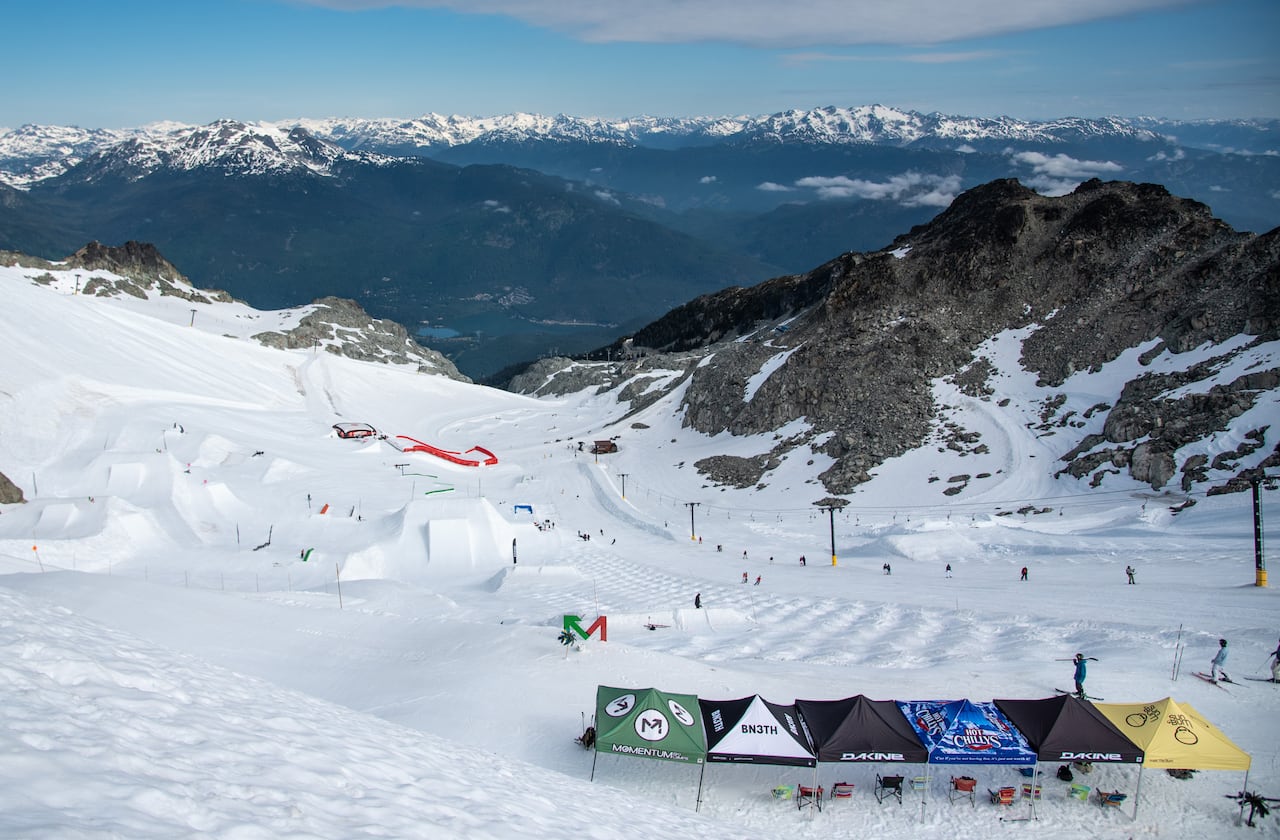
Smart’s initiative to revive summer skiing on Whistler Mountain has not yet been presented to the federal Secretary of Sport. (Submitted by Momentum Camps)
“They are essential to our national identity and who we are as Canadians, and we want to ensure that they remain viable in Canada,” he expressed in an interview with CBC Sports.
From a tourism standpoint, he emphasized the government’s commitment to ensuring that Whistler Blackcomb continues to be able to host significant events, both during the winter season and the off-season.
He has also engaged in discussions with the climate action organization Protect Our Winters, which includes many Canadian athletes among its members. This group acknowledges the dual challenges posed by climate change on the sports we cherish, as well as the potential carbon footprint of those activities.
“It’s a shared responsibility to find solutions for sports to coexist in today’s context while also reducing the carbon footprint of our beloved activities,” van Koeverden stated.

