
Yemen’s Houthi rebels have indicated a cessation of their assaults on Israel and maritime vessels in the Red Sea as a fragile ceasefire holds in the Gaza Strip. A letter from Houthi military’s chief of staff, Maj.-Gen. Yusuf Hassan al-Madani, published online by Hamas’ Qassam Brigades, conveyed a clear message that their attacks have ceased. The letter warned of resuming military operations against Israel and reinstating the ban on Israeli navigation in the Red and Arabian Seas if aggression against Gaza resumes.
While the Houthis have not officially acknowledged the halt in their regional campaign, Israel’s military, which has targeted senior Houthi leaders, chose not to comment when contacted by The Associated Press. In response to a drone attack on Eilat that injured 22 individuals, Israeli Defence Minister Israel Katz had previously threatened severe retaliation against the Houthis.
The Houthis gained global attention during the Israel-Hamas conflict for their assaults on shipping and Israel. They claimed these actions were intended to pressure Israel to cease hostilities. Since the ceasefire commenced on October 10, the rebel group has not claimed any attacks. Despite the Houthis’ assertion that their campaign targeted Israel-affiliated vessels, the attacked ships had little to no connection to the Israel-Hamas conflict.
The ongoing campaign has resulted in the deaths of at least nine sailors and the sinking of four ships, disrupting shipping activities in the Red Sea, a crucial route for approximately $1 trillion worth of goods annually. The most recent attack targeted the Dutch-flagged cargo ship Minervagracht on September 29, resulting in one fatality and one injury among the crew.
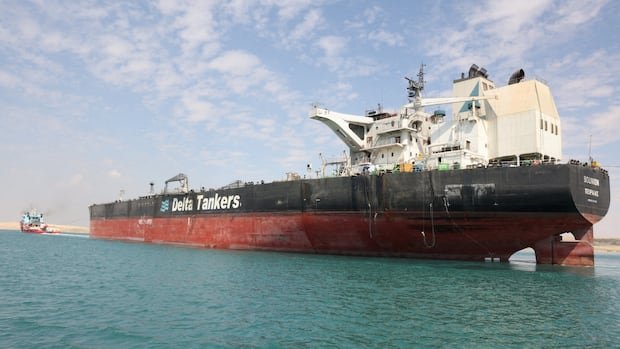
The attacks severely impacted transits through Egypt’s Suez Canal, a vital link between the Red Sea and the Mediterranean. The canal contributes significantly to Egypt’s economy, providing $10 billion in 2023, even as the country faces economic challenges. The International Monetary Fund reported that the Houthi attacks led to a $6 billion reduction in foreign exchange inflows from the Suez Canal in 2024.
Although ship traffic has slightly increased during the lull in attacks, many shippers opt to circumnavigate Africa via the Cape of Good Hope to bypass the Red Sea and the Gulf of Aden. The U.S. initiated a vigorous bombing campaign against the rebels earlier this year, which President Donald Trump paused before his Middle East visit. The Biden administration also carried out strikes against the Houthis, utilizing B-2 bombers to target alleged underground bunkers used by the group.

