
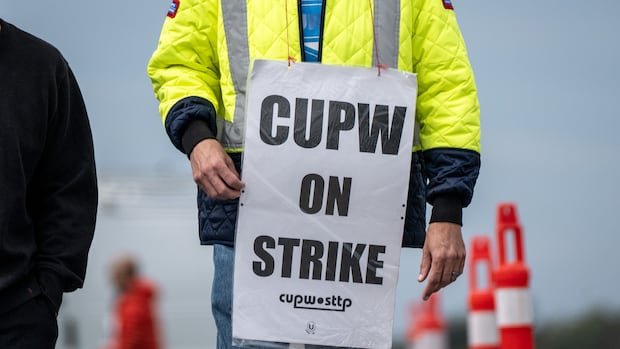
The Canada Industrial Relations Board (CIRB) has rejected the argument made by the Canadian Union of Postal Workers (CUPW) that a government-issued back-to-work order was unconstitutional. The decision was made on December 13, 2024, when federal Labour Minister Steve MacKinnon utilized his authority under Section 107 of the Canada Labour Code to halt the postal workers’ strike and assume control of the labor dispute arbitration process.
In response to the use of Section 107 to end the strike, CUPW contended that this action violated the constitution and raised concerns about potential breaches of the Charter rights of the striking workers. However, the CIRB, in its hearing ruling, emphasized that while the right to strike is crucial, it is not without limitations.
The board ultimately determined that the application of Section 107 did not infringe upon the Charter. Moreover, the CIRB stated that it lacked the jurisdiction to review the minister’s directive that suspended the workers’ right to strike. Despite this decision, one member of the three-member board dissented.
Member Paul Moist, who dissented, supported the union’s stance, criticizing the minister’s use of the labor code as a manipulative strategy. Moist argued that Section 107 was misused for political convenience to bypass parliamentary procedures and public discourse.
According to Moist, the board should not have been permitted to issue the back-to-work order as it impeded the workers’ right to strike, thus violating their Charter right to fair collective bargaining. CUPW also sought a judicial review, but as of now, no ruling has been issued by the federal court.
Regarding the controversial legislation, unions have consistently condemned the government’s reliance on Section 107 to intervene in labor disputes, expressing concerns about its detrimental impact on workers’ ability to strike. They argue that the frequent use of this provision by the Liberal government sets a dangerous precedent, discouraging meaningful negotiations in federally regulated industries and hindering the government’s capacity to resolve strikes effectively.
Section 107 has been part of the labor code since 1984 but has rarely been invoked until recent years, with the Liberal government utilizing it multiple times for various labor disputes. The government’s use of this provision became highly publicized when former Labour Minister Patty Hajdu ordered the termination of the Air Canada flight attendants’ strike shortly after it commenced—an order that the union defied.
In addition to the Air Canada conflict, the government has applied Section 107 in labor disputes involving Canada’s major railway companies, ports in Montreal and Vancouver, and Canada Post.

