
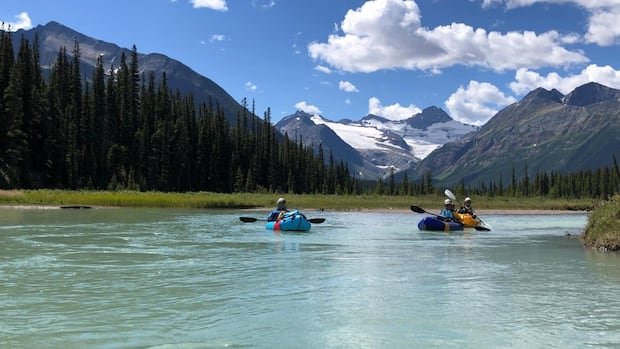
The menace of aquatic invasive species (AIS) has led to the closure of numerous lakes and rivers to watercraft in mountain national parks in Alberta. This development has spurred some paddlers to advocate for a more collaborative approach in addressing the issue.
Beginning this spring, lakes and rivers in Jasper National Park, along with Banff, Yoho, Kootenay, and Waterton Lakes, will be divided into three zones, each with distinct regulations for water activities. While some well-known water bodies remain accessible to paddlers, the restrictions primarily impact the backcountry.
Andrew Loughlin, a seasoned whitewater enthusiast based in Jasper with over two decades of experience, expressed his disappointment with the new regulations in a letter to Parks Canada. He emphasized the emotional impact of losing access to cherished locations that can only be reached by boat.
Loughlin estimated that over 75 percent of navigable waterways in Jasper are now restricted. The decision to implement these measures follows the recent confirmation of whirling disease in Lake Louise, believed to be a consequence of human activities on the lake.
Whirling disease, also detected in Banff and Yoho, results in skeletal deformities in young fish species like salmon, whitefish, and trout, with the potential to devastate up to 90 percent of juvenile fish populations. While it was initially identified in British Columbia in 2024 and subsequently spread to the Kootenay River watershed, Kootenay National Park has remained unaffected.
Parks Canada’s Dave Argument stressed the urgency of taking action to contain the disease, highlighting the irreversible nature of introducing invasive species and diseases into ecosystems. The agency underlined that AIS are commonly transmitted through watercraft and fishing gear moved between different bodies of water.
Although Parks Canada acknowledges the gravity of imposing restrictions, it emphasizes the necessity of safeguarding aquatic ecosystems while supporting safe recreational activities. While certain areas like the Athabasca River’s main stem remain open, advanced backcountry routes with challenging rapids are predominantly off-limits.
The new water activity zones introduced by Parks Canada aim to mitigate the spread of AIS, with specific rules governing activities like scuba diving and fishing with waders. Despite the restrictions, certain activities like swimming and fishing without waders are still permitted in designated areas.
Paddlers like Loughlin and Matthew Bruce, president of Packraft Canada, have raised concerns about the impact of these regulations on their respective water sports communities. Bruce emphasized the importance of biosecurity measures and called for collaboration between user groups and Parks Canada to address invasive species threats effectively.
As Parks Canada continues to urge individuals to follow guidelines for preventing the spread of AIS, paddlers are encouraged to comply with the new restrictions while actively engaging in conversations to shape future strategies for preserving water bodies in national parks.

