
University of Alberta researchers, in collaboration with Canada’s Department of National Defence, have introduced a miniature sensor that operates without a battery. This sensor can monitor vital signs and identify frostbite in soldiers enduring extreme cold conditions. The application of this technology extends beyond military contexts.
Ashwin Iyer, a professor at the University of Alberta’s engineering faculty, is leading a team engaged in a long-term project with the Department of National Defence’s Innovation for Defence Excellence and Security program. The primary objective is to adapt commercial telecommunications technology for military purposes. The university boasts cutting-edge research in SWaP-C systems, focusing on technology that is compact, lightweight, low-power, and cost-effective.
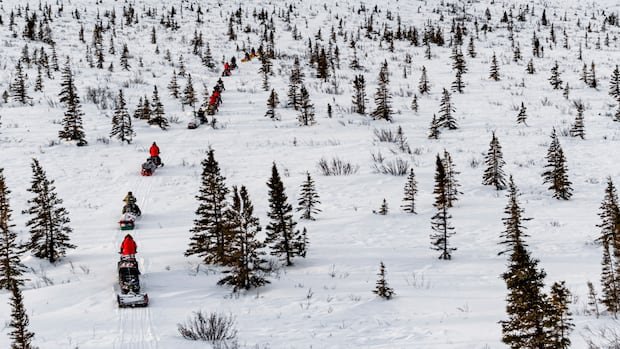
In an interview with CBC’s Shannon Scott on The Trailbreaker, Iyer elaborated on the innovative sensors designed for extreme cold environments. The envisioned scenario involves Canadian or allied soldiers in harsh conditions, such as the High Arctic, where real-time health monitoring is crucial to detect potential issues like frostbite promptly.
Traditional battery-powered devices struggle in temperatures as cold as -70°C due to the limitations of lithium-ion battery technology. To address this challenge, the researchers eliminated the need for batteries in the sensors by enabling them to harvest energy from the surroundings.
The sensors utilize radio frequency identification technology to maintain power, drawing energy from motion or radio frequency waves. By miniaturizing the antennas, the sensors remain wireless and efficient in various operational settings.
The sensors aim to detect frostbite early by monitoring core body temperature and extremity temperatures. When a specific threshold is reached, an alert is triggered to facilitate timely intervention. Beyond military applications, the technology holds promise for emergency response and other scenarios requiring health monitoring in extreme conditions.
These versatile sensors, functional in extreme temperatures, could find utility in diverse settings, including emergency response and household applications like detecting floods or carbon monoxide. The potential for these sensors extends far beyond military contexts, showcasing their adaptability and broad applicability in various environments worldwide.

