
Sudan’s paramilitary Rapid Support Forces (RSF) have accepted a proposal from the United States and Arab nations for a humanitarian ceasefire and are willing to engage in discussions regarding the cessation of hostilities, as stated in a Thursday announcement. Throughout their 2½-year conflict, both the RSF and the Sudanese army have considered various ceasefire initiatives, none of which have been successful. The U.S. administration under President Donald Trump has expressed its commitment to putting an end to the violence in Sudan.
The recent announcement, which has not received an immediate response from the Sudanese army, follows the capture of the famine-stricken city of El Fasher by the RSF over a week ago. El Fasher, besieged for over 18 months, represented the final military stronghold in the western Darfur region. A statement from the RSF expressed readiness to implement the agreement and initiate discussions promptly on the terms for a cessation of hostilities and the core principles guiding Sudan’s political process.
In a recent meeting, the army-led Security and Defense Council refrained from providing a definitive answer to the proposal, despite dissent from influential leaders and allies within the army. A Sudanese military official, speaking on condition of anonymity, stated that the army supports the proposal but will only agree to a truce once the RSF completely withdraws from civilian areas and relinquishes weapons in accordance with previous peace proposals.
Massad Boulos, a U.S. adviser for African affairs, disclosed ongoing efforts with both the Sudanese army and RSF to establish a humanitarian truce, hinting at a potential announcement in the near future. Boulos mentioned that the U.S.-led initiative aims to begin with a three-month humanitarian ceasefire, followed by a nine-month political process.
The conflict between the RSF and the military erupted in 2023 following tensions between the two former allies tasked with overseeing a democratic transition post a 2019 uprising. The war has claimed a minimum of 40,000 lives and displaced 12 million individuals, with humanitarian organizations indicating that the actual death toll could be significantly higher. Additionally, over 24 million people are currently grappling with acute food insecurity, as per the World Food Program.
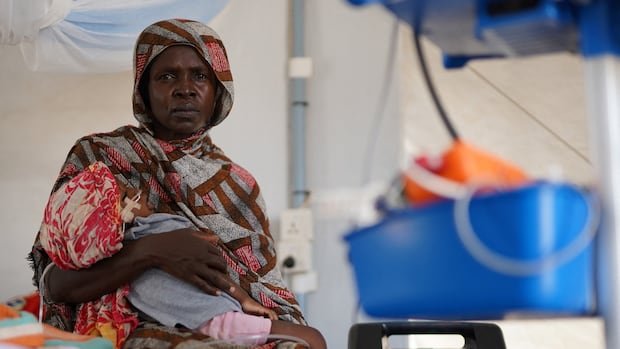
Sudan has long been recognized by humanitarian groups for experiencing one of the most severe displacement crises globally. The capture of El Fasher by the RSF, marked by a series of attacks in the city, led to further displacement. Reports from witnesses indicate that the RSF engaged in killing and abducting civilians during and after seizing El Fasher, including summary executions, prompting international alarm.
The RSF’s high-level commander dismissed allegations of widespread killings as described by eyewitnesses, attributing them to media exaggeration by the army and allied fighters. He mentioned ongoing investigations into any violations by RSF members, with some individuals already arrested. The RSF leadership has facilitated the evacuation of residents from the city and called on aid organizations to provide assistance to those who remain.
Islamic Relief cautioned that community kitchens, a critical source of sustenance for many families, are at risk of collapsing. A recent survey by the organization highlighted that 83% of families in east and west Sudan are facing food shortages. The nonprofit emphasized that the famine affecting El-Fasher and Kadugli is primarily man-made due to ongoing conflict, insecurity, restricted food access, and inadequate humanitarian corridors.
AbdulHakim Elwaer, representing the Near East and North Africa region, stressed the urgent need for humanitarian corridors to ensure aid reaches vulnerable communities. He expressed optimism about reaching a solution by year-end to prevent millions from succumbing to hunger due to aid delivery challenges.

